Once you are diagnosed with a latex allergy, you can take some steps to protect yourself. Follow your doctor’s instructions and the guidelines below.
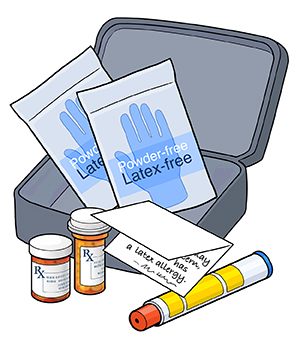
Carry an allergy kit
The kit should include:
-
Injectable or nasal spray epinephrine. This can stop an allergic reaction. Your doctor will give you a prescription for it.
-
Non-latex surgical gloves. You can wear these or give them to others to wear if they must care for you.
-
A note from your doctor stating that you have a latex allergy.
-
A complete list of the medicines you take.
Alert others to your latex allergy
-
Always wear a medical alert bracelet that tells others that you have a latex allergy. This lets them know that they should not use latex when they care for you. You may also want to put a sign in your car window and near your front door that says you have a latex allergy.
-
In addition, contact your health care providers, including your dentist and local hospital. Have them note on your chart or file that you are allergic to latex.
-
You may want to call ahead to restaurants to be sure that the food handlers are using latex-free gloves. People who are allergic to latex are also often allergic to certain fruits. These include banana, avocado, papaya, chestnuts, tomato, and kiwi. You may need to avoid these foods, as well.
Educate your loved ones
It may be hard for your friends and family to understand your latex allergy. Let them know when and how to use your medicines and when to call for emergency help. If they understand your allergy, they will be better able to help you prevent or stop an allergic reaction.
Know the signs of anaphylactic shock
Anaphylactic shock is a life-threatening allergic reaction. If you have signs of shock, use your epinephrine immediately. Then call
The signs of anaphylactic shock include:
-
Swelling of the throat.
-
Wheezing or inability to breathe.
-
Facial flushing.
-
Fast, pounding heartbeat.
-
Feeling faint.

Related Articles
Controlling Allergens: Dust Mites in the Bedroom
Dust mites are tiny bugs that live in warm, damp places. They're too small to see. And they're found in nearly every home. Read on for helpful tips on controlling dust mites in your bedroom.
Controlling Allergens: Pollen
Read on for tips to help limit your exposure to pollen.
Wheat Allergy Diet
Detailed information on wheat allergy, a type of food allergy. Includes how to read a label for a wheat-free diet and tips when dining out.
Allergy Overview
Allergies are problems of the immune system. Normally the immune system attacks harmful things such as viruses or bacteria. But sometimes it overreacts and responds to things that are normally harmless. These may include dust, mold, pollen, or food.


