Exercise is a vital part of maintaining balance, flexibility, and mobility in those with Parkinson disease. Exercise can also help you continue with the activities of daily living. Generally, a mix of 4 types of exercises may be used:
-
Aerobic activity
-
Strength training
-
Balance
-
Flexibility
Your healthcare provider or physical therapist will work with you to develop an exercise program that is right for you, based on your symptoms and challenges. Some common exercises illustrated below may be a good place to start.
How often should I exercise
Do the exercises once a day at first, then build up to several times a day. Being consistent is important. Exercise slowly, and stop if you feel pain. Studies have shown that those exercising earlier in their disease course for at least 2.5 hours per week have a better quality of life.
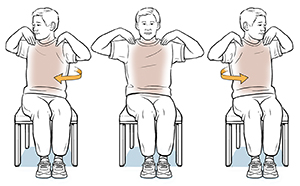
Body twist
Follow these steps:
-
Sit in a chair, facing forward. Place your hands on your shoulders.
-
Turn your head and body to the side as far as possible, as if you were trying to look behind you.
-
Return to starting position, then turn to the other side.
-
Repeat 10 times.
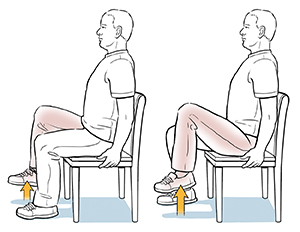
Seated march
Follow these steps:
-
Sit in a chair, facing forward.
-
Slowly lift one knee as high as you can, then lower your foot to the floor.
-
Do the same with your other leg.
-
Repeat 10 times with each leg.
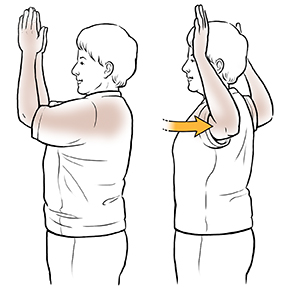
Back stretch
Follow these steps:
-
Stand or sit with your back straight.
-
Hold your arms in front of you. Put your hands and elbows together, hands pointing toward the ceiling.
-
Move your arms apart as far as possible, pushing your shoulder blades together.
-
Slowly move your hands back together.
-
Repeat 10 times.

Related Articles
Spinal Cord Injury (SCI): Managing Your Bowel
After an SCI, your bowel may not work the same way as before. To help you adjust to and manage the changes, your healthcare team has helped you create a bowel program to follow on a regular basis. It's up to you to put this program into practice. Doing so will help you remain active, social, and healthy.
Problems with the Senses After Brain Injury
Sometimes an injury damages the part of the brain that controls balance, sight, or hearing. Or memory loss may keep a person from remembering certain sights, sounds, smells, or tastes. Some people have trouble handling abstract ideas, like time, or they may simply lose track of what they are doing.
Loss of Sensation: Safety Tips
When you have loss of sensation, you're more likely to hurt yourself and not know it. Learn how to protect your health and reduce your risk of injury.
The Cluster Headache: Just Like Clockwork
Cluster headaches -- called cluster because of their pattern of striking in groups or clusters -- hit at the same time of day for a period of weeks or months, then vanish as suddenly and as mysteriously as they appeared.


