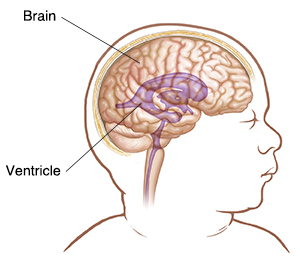
Intraventricular hemorrhage (IVH) is a serious condition caused by bleeding (hemorrhage) in the ventricles. Ventricles are chambers in the brain that hold cerebrospinal fluid (CSF). The fluid circulates from the ventricles into the spinal column. In premature babies, the ventricles are lined with tiny, fragile blood vessels. This makes them more at risk for IVH. Changes in blood pressure can cause them to bleed (hemorrhage). This is IVH. Blood in the ventricles can keep fluid from circulating normally. If IVH occurs, it often happens 3 to 5 days after birth.
The best way to decrease IVH is to reduce the number of preterm births. Giving steroids to birth parents at risk of early preterm delivery may help reduce the risk for IVH. Getting to a hospital as soon as possible with preterm labor will also reduce the risk. Several methods are used right after delivery to try to reduce the IVH risk.
How is IVH diagnosed?
Ultrasound is a noninvasive imaging test. It's used to look at the brain for signs of bleeding. A baby born at less than
What are the long-term effects?
The outcome depends on how severe the problem is. Many babies have less severe IVH (grade 1 or 2). These babies will often have few or no long-term effects. Babies with more severe disease may have serious complications. These can include nervous system damage and developmental delays. Babies with grade 3 IVH may need treatment for fluid buildup in the brain (hydrocephalus). Grade 4 IVH is very likely to cause hydrocephalus, leading to more serious long-term problems. Babies with grade 3 IVH, and even some with grade 4 IVH, may have a better outcome with only minor long-term effects if treated correctly and caught early.
What is hydrocephalus?
This condition occurs when fluid is trapped and builds up in the ventricles. This causes swelling, which puts pressure on the brain tissue. A baby’s skull is soft. This means it can expand. The baby's head circumference may be measured to watch these changes. The main outward sign of hydrocephalus is that the baby's head gets larger. If swelling continues, pressure on the brain can increase. In some cases, swelling goes down without treatment. If pressure is not eased, it can cause brain damage. Treatments for hydrocephalus include:
-
Spinal tap (lumbar puncture). This treatment draws fluid from the spinal column to assess it. It eases pressure in the short term (temporarily).
-
A shunt or a ventricular tap. This draws fluid directly from the ventricle in the brain. It sends the fluid to another part of the body or outside the body.
Featured in

Related Articles
Periventricular Leukomalacia (PVL) in the Premature Infant
Periventricular leukomalacia is softening of brain tissue near the ventricles.
Intraventricular Hemorrhage in Babies
Intraventricular hemorrhage (IVH) is bleeding inside or around the ventricles in the brain. The ventricles are the spaces in the brain that contain the cerebral spinal fluid.
Cranial Neuropathies
Cranial neuropathy is a disorder that causes nerve damage in the nerves that arise from the brain and brainstem. This disorder can affect the ability of the face and eyes to feel and move.
Discharge Instructions: Going Out, Visitors, and Your Premature Infant
Your preemie's immune system needs time to develop. During this time, germs that don't make you sick at all could make the baby very sick. So you need to give your baby extra protection.


