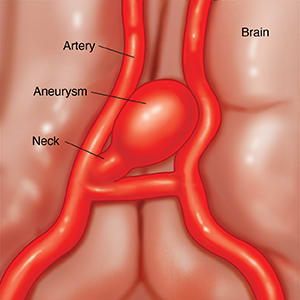
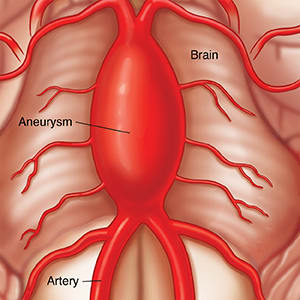
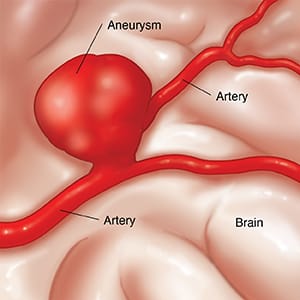
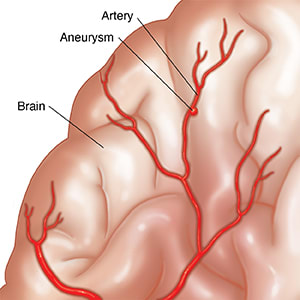
There are several types of brain aneurysms that are classified by shape. These are saccular (also called berry) aneurysms, which are by far the most common. Less common are the fusiform and dissecting types. Brain aneurysms may also be classified by:
- Size (small, large, and giant)
- Location
- Cause (such as a mycotic aneurysm, caused by an infection)
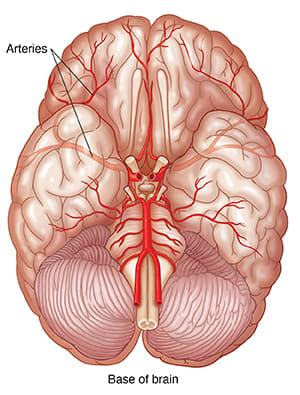
Most aneurysms occur where an artery branches, often at the base of the brain. The risk of an aneurysm bursting (rupturing) can be affected by the shape and location of the aneurysm. The treatment choices vary, depending on the type of aneurysm, its size, and its location.

Related Articles
Types of Muscular Dystrophy and Neuromuscular Diseases
Muscular dystrophy is a group of inherited diseases that are characterized by weakness and wasting away of muscle tissue, with or without the breakdown of nerve tissue. Learn more about the types of muscular dystrophy and other types of neuromuscular diseases.
What is a Focal Seizure (Partial Seizure)?
Seizures can be caused by irritation or damage to the brain from trauma, scar formation, tumors, stroke, or infection. Usually the cause is unknown. However, most partial seizures can be successfully treated. With treatment, most people with seizures lead normal, fulfilling lives.
Essential Tremor (ET)
Essential tremor (ET) is a neurological disorder. It causes your hands, head, trunk, voice, or legs to shake rhythmically. It is often confused with Parkinson disease. It is most common in people older than age 65.
Brain Cyst
A brain cyst is an abnormal fluid-filled sac in the brain. A cyst may contain blood, pus, or other material. In the brain, a cyst may contain cerebrospinal fluid (CSF). CSF normally bathes and cushions the brain and spinal cord. Often, a brain cyst begins before birth.


