A Dandy-Walker malformation (DWM) is a birth defect of the brain. It means that the cerebellum doesn’t form the right way as a fetus develops. The cerebellum is the part of the brain that controls body movement.
DWM may also affect parts of the brain near the cerebellum, namely the fourth ventricle. A ventricle is a fluid-filled space in the brain. It lets cerebrospinal fluid (CSF) flow between the brain and the rest of the nervous system.
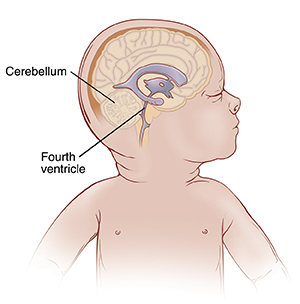
Babies born with DWM have:
-
A smaller or abnormal-shaped cerebellum.
-
A larger fourth ventricle.
-
A larger skull base.
DWM may occur with other birth defects or central nervous system disorders. Children with DWM also often have hydrocephalus. This is a condition in which CSF builds up in the brain. CSF surrounds the brain and spinal cord and acts as a cushion. The brain normally has a certain level of CSF in it. Too much of this fluid can cause too much pressure on the brain, leading to brain damage.
What causes a Dandy-Walker malformation?
The exact cause of DWM is not known. It happens because the cerebellum and other nearby parts of the brain don’t develop as they should during pregnancy. Genetic changes may lead to DWM. It sometimes runs in families. Other possible causes include drinking alcohol or having the rubella virus when pregnant.
Symptoms of Dandy-Walker malformation
The symptoms of DWM are often seen at birth. But they may start later in life. Children with DWM often have delays in development. They may also have intellect problems.
Symptoms of DWM vary from child to child. They depend on how bad the condition is. They may include:
-
Trouble with coordination.
-
Balance problems.
-
Lack of muscle tone.
-
Muscle stiffness.
-
Larger head size.
-
Irritability.
-
Jerking movements of the eyes.
-
Hydrocephalus, which can cause symptoms like headache, vision changes, nausea, and vomiting.
Ultrasound, CT scan, and MRI help in diagnosing DWM. Diagnosis is sometimes done with ultrasound or fetal MRI during pregnancy.
Treatment for Dandy-Walker malformation
Treatment for DWM depends on the severity of the condition. Your child may need:
-
Physical therapy to help build muscle strength and improve flexibility.
-
Occupational therapy to help with any physical disabilities.
-
Special education if your child has trouble learning or understanding.
If DWM causes hydrocephalus, your child may need surgery to drain extra CSF from the brain. A tube (catheter) is put in the brain. This tube runs under the skin to the lining of the abdomen (peritoneum). It carries CSF there to be safely absorbed by the body.
Possible complications of Dandy-Walker malformation
A child with DWM may have:
-
Seizures.
-
Breathing problems.
-
Hearing and vision problems.
When to get medical advice
Contact your child’s health care provider if your child has:
-
A fever of 100.4°F (38°C) or higher, or as directed by your child’s provider.
-
Symptoms that don’t get better or that get worse.
-
New symptoms.

Related Articles
Neuroblastoma
Neuroblastoma is a cancerous tumor. It grows in nerve tissue of babies and young children. The cancer cells grow in young nerve cells of a baby growing in the womb. These cells are called neuroblasts. It’s in the most common cancer in babies under age 1. It’s rare in children older than age 10.
When Your Child Has Cerebral Palsy (CP)
Cerebral palsy (CP) causes a child to have problems with certain motor skills. Learn about the causes of CP, different types, symptoms, diagnosis, treatment, and other concerns.
Hydrocephalus in Children
A baby with hydrocephalus has extra fluid in and around the brain. Read on to learn more about this condition.
Types of Muscular Dystrophy and Neuromuscular Diseases
Muscular dystrophy is a group of inherited diseases that are characterized by weakness and wasting away of muscle tissue, with or without the breakdown of nerve tissue. Learn more about the types of muscular dystrophy and other types of neuromuscular diseases.


