Sixth nerve palsy is a problem with eye movement. It happens because of a problem with the sixth cranial nerve. The nerve is also known as the abducens nerve. In some cases, sixth nerve palsy is present at birth (congenital). It can also result from other problems that occur later on.
How the sixth cranial nerve affects the eye
The sixth cranial nerve sends signals to the small muscle that attaches to the outer side of the eye (lateral rectus muscle). When this muscle contracts, the eye turns outward, away from the nose. Each eye has its own lateral rectus muscle served by its own cranial nerve.
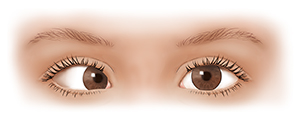
What causes sixth nerve palsy?
The sixth nerve leads from the lower part of the brain. It’s a long nerve. Damage at any point on the nerve can cause it to work poorly or not at all. If this happens, the lateral rectus muscle won’t get signals. It then won’t contract correctly. Your child’s eye will turn inward toward their nose.
In some cases, there may be a problem with the sixth cranial nerve at birth. This is known as congenital sixth nerve palsy. In some babies, the nerve cells that control the sixth nerve never develop, such as in Duane syndrome.
Sixth nerve palsy may also happen as a result of injury during birth. Other common causes in children include:
-
Injury, especially a skull fracture
-
Brain tumor
-
Stroke
-
Increased pressure in the brain, from meningitis, or other causes
In some cases, the cause of sixth nerve palsy is not known.
Symptoms of sixth nerve palsy
Sixth nerve palsy may affect one or both eyes, depending on its cause.
The most common symptom of sixth nerve palsy is double vision when both eyes are open. This is more common when looking far away or when looking in the direction of the affected eye. Not everyone with sixth nerve palsy has this symptom.
Your child’s eyes may also be out of alignment. This is called strabismus. The eye on the affected side may turn toward the midline. Early on, your child may have this only when looking in the direction of the affected eye. If the palsy gets worse, the eye may turn toward the midline even when your child looks straight ahead.
If eye movement problems are the only symptoms, this is called isolated sixth nerve palsy. Sixth nerve palsy can also include neurological or other symptoms. This is called nonisolated sixth nerve palsy.
Additional symptoms may include:
-
Hearing loss
-
Facial weakness
-
Less feeling on their face
-
Droopy eyelid
-
Fever
-
Headache
-
Nausea and vomiting
Diagnosing sixth nerve palsy
The healthcare provider will ask about your child’s health history and symptoms. Your child will have a physical exam. This will include a detailed nervous system exam. This type of exam uses tests to see which parts of your child’s brain and nervous system may be affected. A neurologist may examine your child. This is a healthcare provider who specializes in the nervous system. The healthcare provider will also try to diagnose the cause of the sixth nerve palsy.
Your child may have brain imaging tests, such as:
-
CT scan. This test uses a series of X-rays and a computer to make detailed images. A CT scan might be needed if your child may have increased pressure in the brain.
-
MRI. This test uses strong magnets and a computer to make images of the brain.
Your child may need other tests to find the cause of sixth nerve palsy. This may include blood tests or a spinal tap (lumbar puncture) to look for an infection, such as meningitis.
Featured in

Related Articles
Astrocytoma in Children
Astrocytoma is the most common type of brain tumor in children. It is usually low grade, which means slow-growing.
Brain Tumors in Children
A brain tumor is an abnormal growth of tissue in the brain. The brain is part of the central nervous system (CNS). The CNS also includes the spinal cord.
Oligodendroglioma in Children
The brain is part of the central nervous system (CNS). The CNS also includes the spinal cord. A tumor is an abnormal growth of tissue. An oligodendroglioma is a type of CNS tumor called a glioma.
Overview of Nervous System Disorders in Children
The most common symptoms of nervous system disorders in children include delays in developmental milestones, an increase or lack of growth in head size, and a lack of coordination.


