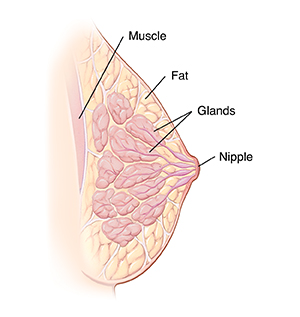
Puberty is the stage of adolescence when your child starts to develop physically into an adult. During puberty, a girl’s breasts begin to grow. As the breasts develop, problems like lumps or infections sometimes occur. These problems can be alarming. But they are common and rarely serious.
Normal and nothing to worry about
Below are some things you or your daughter may be concerned about. But these are not problems. Reassure your daughter that they are perfectly normal:
-
Early or late breast development. The breasts begin to develop at the start of puberty, around age 9 or 10. But this can vary, and some girls develop later or earlier.
-
One is breast larger than the other (asymmetry). Girls commonly have one breast that develops faster than the other. It's also common and normal for girls and women to have one breast that is larger than the other. The difference can be as much as a bra cup size or more.
-
Small or large size. Breasts come in all shapes and sizes. There is almost no size that is considered abnormal. If breasts fail to develop at all, or if they are so large they are causing neck or back issues, talk to your daughter’s doctor.
-
Breast pain around periods. It's common for breasts to become sore before or during menstrual periods. This is due to hormone changes and is not a cause for concern. If the pain is severe, your daughter’s doctor can suggest treatment.
Common conditions that can be treated
The following are breast conditions that are fairly common in teens. They cause symptoms that may be worrisome. But they are not serious. In many cases, they don’t even need treatment. Talk with the doctor if your daughter has signs of any of these problems.
-
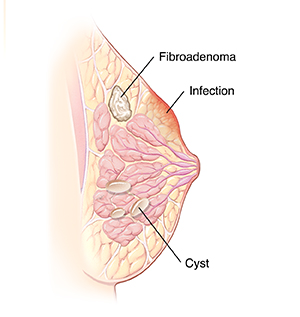
Fibroadenomas. These are smooth, solid lumps of fibrous tissue in the breasts. They are not cancer (benign) and are harmless. Fibroadenomas may come and go around periods. If your daughter has a lump, their doctor can confirm whether it is a fibroadenoma. If the lump is growing in size or is painful, it can be removed.
-
Fibrocystic breast changes. This is the development of fluid-filled sacs in the breasts. They make the breast feel lumpy, tender, or painful. They are not cancer. And they don’t make a girl more likely to get breast cancer. Treatment can help relieve symptoms. Reducing the amount of caffeine and fat in a girl’s diet may help. Your daughter’s doctor can discuss other treatment choices with you.
-
Infection. Infection is the growth of harmful bacteria. Infection of breast tissue is possible, especially if your daughter is too modest to get a cut or sore on the breast cared for. Symptoms of infection include redness, warmth, red lines on the skin, or the skin feeling sore. Your daughter may also have a fever. If your daughter shows signs of an infection, call the doctor. Treatment with antibiotics may be needed.
When to contact your doctor
Contact the doctor if your daughter has:
-
Signs of breast infection.
-
Nipple discharge.
-
New lumps, or lumps that grow or are painful.
-
Breast pain that doesn’t go away with the menstrual cycle.
-
No breast development by age
15 .
Featured in


Related Articles
Breast Conditions in Young Women
Some breast changes or conditions are related to a young woman's menstrual cycle, but others may occur at any time. Most breast conditions are benign. Read more about breast changes in young women.
For Teens: Birth Control Choices
Having sex is a serious decision that you should think about carefully. If you decide to have sex, your healthcare provider can help you decide which type of birth control is best for you. Some of the most common types are described below.
Teen Drivers
Information on teen driving, including safety tips.
Is Your Teen Abusing Drugs or Alcohol?
Besides having trouble with school and relationships, teens taking drugs may display emotional extremes with irritability, anger, and changes in sleep patterns.