The belly (abdomen) is the largest space (cavity) in the body. It lies between the chest and the pelvis, holding many of the body’s organs. These include the liver, stomach, and intestines.
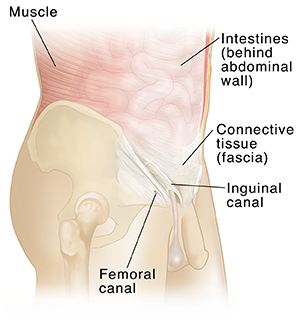
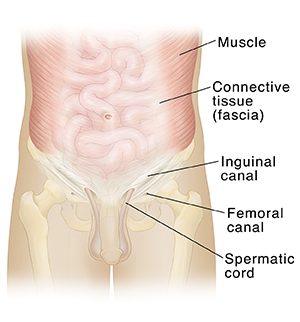
The groin is the area in the body where the upper thighs meet the lowest part of the abdomen. Normally, the abdomen and groin are kept separate by a wall of muscle and tissue. The only openings in the wall are small tunnels called the inguinal and femoral canals. These allow nerves, blood vessels, and other structures to pass between these 2 areas.
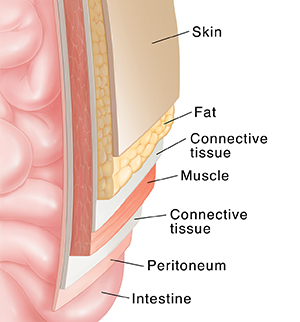
The abdomen and groin
-
Muscles. These are soft tissues. They enclose the intestines and other organs in the abdomen.
-
Connective tissue. These help bind the muscles together.
-
Inguinal canal. This tunnel in the groin is formed by layers of muscle and other tissues in the wall of the abdomen.
-
Femoral canal. This tunnel in the wall of the abdomen allows blood vessels and nerves to pass through the groin into the leg.
-
Spermatic cord. This passes through the inguinal canal and connects to the testicle.

Related Articles
Anatomy of the Anus
The anus is the last part of the digestive tract. Learn more about its anatomy, including where anal cancer is likely to start.
Colostomy: Selecting Your Pouch
After a colostomy, stool is most often collected in a pouch that attaches to your body around the stoma. An adhesive skin barrier holds the pouch in place and keeps stool from leaking onto the skin. Most pouches are made of lightweight, odor-proof plastic. They lie flat against the body so they don't show or make noise.
Colostomy: Changing Your Pouch
Your healthcare provider gave you a stoma (new opening for stool to pass from the body) during surgery. Stool starts to pass from the stoma soon after surgery. That means you'll need to learn how to change your pouch before you go home.
Abdominal Ultrasound
Abdominal ultrasound is an imaging test that uses sound waves to form pictures of your abdominal organs. It can help detect organ problems, such as gallstones, kidney stones, or liver disease.


