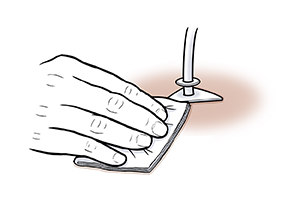
You need to keep the skin around the feeding tube dry and clean. This helps prevent soreness and infection. The mouth also needs to be cleansed, even though food isn’t taken through it.
Cleaning the skin
Gently wash the skin around the feeding tube each day. Follow these steps:
-
Wash your hands. Wet a soft cloth or gauze with warm, soapy water.
-
Gently wipe the skin around the feeding tube. Also wipe the bolster and the base of the feeding tube.
-
Rinse well with clear, warm water.
-
Pat dry with a soft cloth.
Checking under the bolster
A bolster is a piece of soft plastic that sits directly on top of the exit site. The bolster helps to keep your feeding tube from moving further inside your stomach. Not all feeding tubes have a bolster.
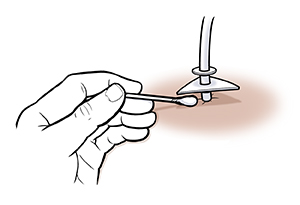
When you wash the skin, clean and check under the bolster. Follow these steps:
-
Gently lift the bolster just enough to get a cotton swab under it. Be careful not to pull on the feeding tube.
-
Check for redness, swelling, bleeding, or leakage around the opening.
-
Dip a cotton swab in warm water and gently clean under the bolster. Pat the skin dry.
-
Apply a protective skin barrier or antibacterial ointment if your health care provider tells you to.
-
Gently push the bolster back against the skin. Make sure it's not too tight against the skin.
-
Give the feeding tube a gentle 1/4 turn. This helps keep the bumper from sticking to the inside of the stomach.
-
Wash your hands.
Caring for the mouth
Good oral health care is still important to help keep breath fresh, teeth healthy, and prevent infections and tooth decay.
To keep the mouth clean, follow these steps:
-
Brush the teeth or dentures at least once daily with a soft toothbrush.
-
Wipe the inside of the mouth with a damp washcloth.
-
Apply a lip balm to keep the lips moist.

Related Articles
Taking Medicine Through a Feeding Tube
You are going home with a feeding tube in place. If you normally take any medicines by mouth, you will need to take them through your feeding tube. You can make this easier by calling your pharmacist to see whether any of your medicines are available in liquid form. If they are, ask that your prescriptions be filled with liquid medicines.
Living with an Ostomy
When your body is unable to remove waste in the normal way, you may need an ostomy. This is an opening that is created surgically somewhere on the body to help the body get rid of stool or urine.
Soft Diet
Your healthcare provider has prescribed a soft diet. This means eating foods that are soft, low in fiber, and easy to digest. Here are some general guidelines to get you started.
Potassium-Rich Foods
The normal adult diet usually contains 2,000 mg to 4,000 mg of potassium per day. If you need more of this nutrient in your diet, include these high-potassium foods.


