Gastroesophageal reflux (GER) is when gas or liquid from the stomach comes up the esophagus. All babies have reflux from time to time. It can cause babies to have wet burps after feedings. Babies may also have spit-ups, which are a gentle return of milk or stomach contents to the esophagus and mouth. This is because in babies the muscle that opens and closes the top of the stomach is very relaxed. It opens easily. Gas and fluid tend to escape.
Babies with severe reflux have gastroesophageal reflux disease (GERD).
What are the symptoms of GERD?
A baby with GERD may spit up too much. They may not get enough nourishment from food. A baby can also aspirate (breathe in) spit-up liquid. This can cause problems with your baby’s breathing. Common symptoms include:
-
Lots of crying
-
Very irritable
-
Increase in frequency or intensity of spit-up
-
Trouble feeding or refusal to feed
-
Poor weight gain or weight loss
-
Malnutrition
-
Trouble swallowing
-
Arching of the back during feedings
-
Sleep problems
-
Respiratory symptoms such as coughing or wheezing
-
Swollen, distended, or hard-feeling belly
How is GERD diagnosed?
In most cases, GERD is diagnosed by reviewing your baby's symptoms, feeding patterns, and health history. Your child's healthcare provider may also check your child's growth by plotting their weight and height on a growth chart. In some cases, tests may be needed to find the cause of your child’s symptoms. Common tests for GERD include:
-
Upper GI series. This test is also called a barium swallow. Barium is a thick, chalky liquid. When swallowed, it makes the esophagus and stomach show up on X-rays.
-
Endoscopy. Your baby is given a medicine (anesthesia) to make them fall asleep. Then a tube (endoscope) with a light and a tiny video camera on it is put down your child’s throat. This lets the provider look at your child’s esophagus and stomach.
-
A 24-hour esophageal pH study. The provider puts a very thin tube into your child’s esophagus. This tube is connected to a monitor that records acid levels and reflux activity for a day or longer.
How is GERD treated?
-
Feeding changes. You may need to feed smaller amounts more often. You may need to burp your baby more often during feedings. Letting more time pass between feedings may help. Your child’s healthcare provider may advise adding cereal to formula or stored breast milk to make it thicker. Don’t change your baby’s food unless their healthcare provider tells you to do so.
-
Diet changes. To rule out milk protein allergy, your baby may need to start a trial of cow's milk protein-free diet for several weeks. If your baby is fed with formula, you may need to give your baby a special formula. If your baby is breastfed, the mother may be advised to change their diet so they don't have cow’s milk protein.
-
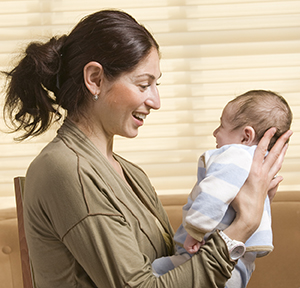
Positioning therapy. Keep your baby upright after feeding. For
20 to 30 minutes after feeding, place your baby so that their head is higher than their stomach. Do this by carrying your baby in an upright position. For example, put the baby over your shoulder. Don't place your baby in a baby carrier or car seat. When it’s time for sleep, put your baby on their back on a flat, firm, non-inclined surface. This is to help prevent SIDS (sudden infant death syndrome). -
Medicines. These may include medicines to lower the amount of acid in the stomach.
-
Surgery. In severe cases, surgery may be done. It makes the valve at the top of the stomach stronger. It does this by wrapping part of the stomach around the esophagus.
What are the long-term effects?
In most cases, reflux gets better over time and causes no long-term problems.
Featured in

Related Articles
Your Child Has Ulcerative Colitis
Ulcerative colitis is a type of inflammatory bowel disease (IBD). It affects your child's large intestine (colon) and rectum (where stool is stored before leaving the body). Ulcerative colitis causes swelling, bleeding, and sometimes sores. Causes are unknown, but your child's symptoms can be managed.
When Your Child Has Appendicitis
A detailed look at what to know when your child has appendicitis, from symptoms and diagnosis to treatment and recovery.
E. coli Infection in Children
E. coli is a common bacteria found in people's and animals' intestines. It's also found in the environment and in food. Certain types of E. coli are harmful and can cause severe illness. Learn how E. coli affects children and how it's treated.
Hernias in Children
A hernia occurs when a section of bowel pushes out through a weakness in the muscle. The hernia looks like a bulge under the skin. In baby boys, a bulge in the scrotum is the most common type of hernia and is the result of a persistent canal between the scrotum and abdomen that normally closes when a fetus is developing. A hernia can move back into the abdomen through the passage. So you may not see the bulge all the time. You may see it most when your baby is straining (such as during crying, feeding, or a bowel movement).


