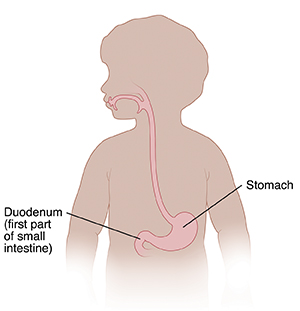
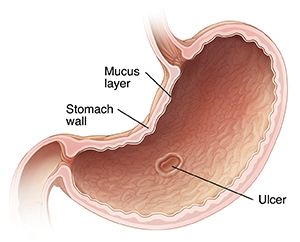
Helicobacter pylori (H. pylori) is a common bacteria that infects the stomach. It can cause sores (ulcers) in the stomach. H. pylori increases acid production in the stomach. And it weakens the mucous layer that coats the inside of the stomach and the first part of the small intestine (duodenum). This lets stomach acid get through and burn the stomach wall.
Long-term infection with H. pylori increases the risk of stomach cancer.
What are the symptoms of ulcers?
Ulcer symptoms can come and go. Or your child may not have symptoms at all. Common symptoms include:
-
Burning, cramping, pain, or a feeling of hunger in your child’s stomach. This often happens
1 to 3 hours after a meal, or in the middle of the night. -
Pain that gets better or worse with eating.
-
Nausea or vomiting. There may be blood in the vomit. Or vomit may look like coffee grounds.
-
Black, tarry stools. This means the ulcer is bleeding.
-
Weight loss.
-
Bloating.
-
Loss of appetite.
How are ulcers caused by H. pylori diagnosed?
Your child’s doctor can order tests to see if ulcers are present. The doctor will then check to see if the ulcers are caused by H. pylori. Tests may include:
-
Barium upper gastrointestinal (GI) series. This is a special type of X-ray test. Your child will drink a chalky liquid that helps ulcers show up on an X-ray.
-
An endoscopic exam. An endoscope is a thin, soft tube with a tiny camera at one end. After your child is sedated or under anesthesia, the tube is inserted through your child’s mouth into the stomach. This allows the doctor to see the ulcers. This tube may also be used to take a tiny tissue sample (biopsy).
-
Urea breath test. For this test, your child blows into a bag after drinking a solution. The breath is then checked for a chemical that indicates if H. pylori is present.
-
Blood or stool tests.
How are ulcers caused by H. pylori treated?
The doctor will prescribe antibiotics to treat the H. pylori bacteria. Your child may also need medicine to reduce stomach acid production and help heal the stomach lining.
-
Antibiotics are given to get rid of H. pylori infection. It may take 8 to 12 weeks of medicine to relieve your child’s symptoms and heal the ulcer. Make sure that your child takes all of the antibiotics prescribed. Not taking the entire course can keep the bacteria in their system.
-
Proton pump inhibitors help by preventing acid from being made in the stomach.
-
Bismuth salicylate (such as Pepto Bismol) is sometimes used to help heal the ulcer.
Follow all instructions about giving your child medicines. This will often prevent ulcers caused by H. pylori from returning. Your child's doctor may order a stool or breath test after treatment to make sure the bacteria is gone. If it is not gone, your child may need to repeat the treatment.
Featured in

Related Articles
GERD (Gastroesophageal Reflux Disease) in Children
GERD is sometimes called acid indigestion or heartburn. It happens when stomach contents flow back up (reflux) into the esophagus. If your child has GERD, they should be checked by a health care provider.
Anal Fissure (Child)
Sometimes a crack or tear occurs in the lining of the anal canal. This condition is called an anal fissure. Symptoms include pain and bleeding, especially during a bowel movement.
When Your Child Has an Elimination Dysfunction
You've been told your child has an elimination dysfunction, which is a problem holding or releasing urine or stool. Learn more about this condition and the options for treatment.
Treating Celiac Disease in Children
To treat celiac disease, remove all sources of gluten from your child's diet. It's important to do this even if your child is not feeling sick. Removing gluten will prevent symptoms and health problems caused by celiac disease.


