Sound moves through the air like the ripples you see after throwing a stone into a pond. Your ears collect these waves of sound around you and send them to your brain. This is how the parts of your ear work so you can hear.
Three parts of your ear
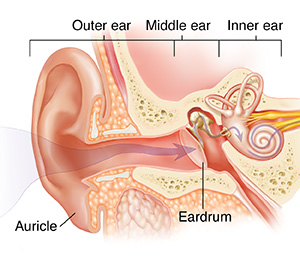
Your ear is made up of the following parts:
-
Your outer ear collects sound waves.
-
Sound waves enter the ear and hit the eardrum in your middle ear. Three tiny bones in the middle ear are set into motion.
-
This transfers sound waves to the fluid-filled inner ear. There, thousands of hair cells turn sound waves into nerve impulses. These impulses travel along nerves to your brain. When the impulses reach your brain, you perceive sound.
Damaged hair cells affect hearing
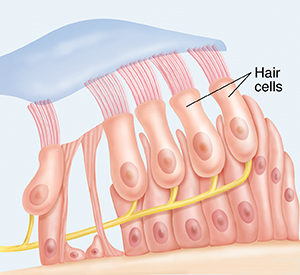
Hair cells move when incoming sound vibrates the inner ear fluid. The motion is turned into impulses that let you hear the sound.
Loud noise causes hair cells to move too much and can damage them. Flattened hair cells can't fully send nerve impulses to your brain. Once damaged, hair cells never recover.

Related Articles
Dizziness (Vertigo) and Balance Problems: Staying Safe
Falls or accidents can lead to pain, broken bones, a hospital stay, and a fear of future falls. Protect yourself and others by preparing for episodes. Simple steps can help increase your safety at home and wherever you go.
Ménière's Disease
Ménière disease is a balance disorder. It causes a severe spinning sensation (vertigo), hearing issues, loss of balance, and headaches.
Vocal Cord Disorders
Vocal cord disorders can affect your voice or your ability to talk. They are often caused by using the voice too much when singing, talking, coughing, or yelling.
Audiology
Audiologists address hearing and balance problems in people of all ages. They also help with the fitting and management of hearing aids.


