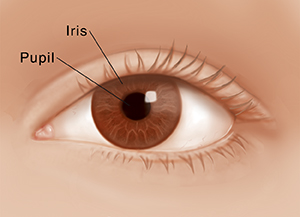
Aniridia means lack of an iris. It's a rare disorder in which the iris of the eye is partly or completely missing. The iris is the round, colored part of the eye. It controls the size of the pupil and the amount of light that enters the eye.
Aniridia usually affects both eyes. It causes the pupil to be abnormally large. It may also be oddly shaped. The condition can also cause problems with the cornea, lens, retina, and optic nerve. Some of these problems may be present at birth. Others may happen later in life. Problems with other parts of the eye may cause problems that are more severe than the missing iris.
How to say it
an-ih-RIH-dee-uh
What causes aniridia?
Many cases of aniridia may occur because of a problem with a gene known as PAX6. This gene is passed on from parents to children. It helps control eye health and growth. If the PAX6 gene isn’t normal, the eyes may not grow correctly. A child of a person with aniridia has a 50% chance of having aniridia. But some children with aniridia don’t have a parent with it. Talk with your child’s healthcare provider if you are interested in genetic testing for other family members.
In most cases, aniridia occurs on its own. But it may be part of a syndrome, such as:
-
WAGR syndrome. This includes a rare kidney cancer called Wilms tumor, genital and urinary problems, and problems with thinking skills.
-
Gillespie syndrome. This includes problems with thinking skills and trouble with balance (ataxia).
Symptoms of aniridia
Symptoms of aniridia can vary. They can include:
-
Abnormal pupil and iris
-
Poor vision
-
Increased sensitivity to light
-
Uncontrolled eye movements
-
Eyes that are uneven or not aligned (strabismus)
Diagnosing aniridia
Diagnosis of aniridia usually happens early in life. A healthcare provider will ask about your child’s medical history. The provider will also give your child a physical exam. This will also include a detailed exam of your child’s eyes. Your child may also have genetic testing to check for the abnormal gene.

Related Articles
Ocular Histoplasmosis Syndrome
OHS is a disease that can lead to vision loss. It is caused by a fungus. Learn more about the signs and symptoms of OHS, plus how it is treated.
Viral Conjunctivitis (Child)
Viral conjunctivitis is a common infection of the eye. It is very contagious. The most common symptoms include redness, discharge from the eye, swollen eyelids, and a gritty or scratchy feeling in the eye.
Brown Syndrome in Children
Brown syndrome is a rare disorder that limits the eye's normal movements. Here's what you need to know.
Black Eye
In most cases, a black eye is a minor injury and can be treated at home. But there are times when you should get medical care right away.


