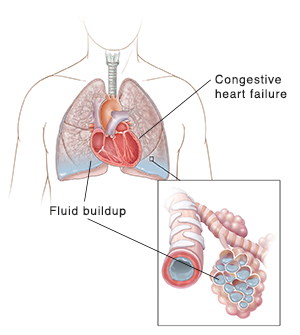
Cardiac asthma is caused by the backup of fluid in the left side of the heart. This may happen if your heart pumps weakly or you have a leaky valve. Or it may happen if you were born with a heart problem. Cardiac asthma is a sign of congestive heart failure.
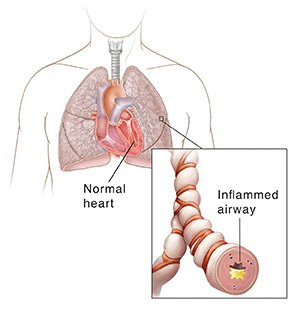
Cardiac asthma is not the same as bronchial asthma. But it causes similar symptoms such as wheezing, coughing, and shortness of breath. Bronchial asthma is triggered by allergies, pollutants, exercise, stress, or lung disease. The small airways in the lungs become irritated and inflamed.
Treatments for bronchial asthma and cardiac asthma are very different. Bronchial asthma is treated with oral or inhaled medicines that open the airways. Treatments for cardiac asthma depend on the cause. They may include heart medicines to control blood pressure and remove excess fluid. Treatment also may include proper diet and modified daily activities. If the cause is a leaky valve or congenital heart defect, surgery may be needed.
Author: Burgo, Kate
Copyright Health Ink & Vitality Communications

Related Articles
Angina Pectoris
Angina pectoris is chest pain or a feeling of chest discomfort that occurs when a part of your heart doesn't get enough blood and oxygen. Learn more about angina, including causes, risks, symptoms, diagnosis, treatment, and prevention.
Ischemic Cardiomyopathy
Ischemic cardiomyopathy is a disease of the heart muscle.
Understanding Atherosclerosis
Atherosclerosis can start as early as childhood and can lead to many health conditions, including heart disease and stroke.
The Cardiologist
A cardiologist is a doctor who has had extra training to treat problems of the heart and blood vessels. These include heart attack and heart failure.


