Red blood cells carry oxygen in the blood. Polycythemia occurs when a baby’s blood has more red cells than normal. It’s the opposite of anemia, which is caused by too few red cells. The extra red cells make the blood thicker. When blood is too thick, it travels through the body more slowly than normal. This problem is called hyperviscosity. As a result, some organs may not get enough oxygen.
What causes polycythemia?
The problem may be caused by one of the following:
-
The baby’s body makes more red blood cells than it should.
-
The baby got extra red blood cells from another source, such as from a twin during pregnancy.
-
Just after birth, too many red blood cells traveled from the umbilical cord to the baby before the cord was clamped.
How is polycythemia detected?
Most babies with polycythemia don't look any different from normal. But a baby with this condition may have skin that looks red, especially while the baby is crying. This is often the first sign of a problem. The baby may also have a bluish color around their lips (cyanosis). The baby may also temporarily stop breathing (apnea), not feed well, or have low blood sugar (hypoglycemia).
A blood test (hematocrit) is done to measure the level of red blood cells. If the number is too high, your baby may need treatment. The healthcare provider will likely also do other blood tests to make sure the higher level of hematocrit is not caused by another condition.
How is polycythemia treated?
-
Treatment will depend on the level of red blood cells (hematocrit), as well as symptoms your baby has.
-
Treatment may include observing your baby, giving them a normal amount of fluids and sugar (glucose), and periodic retesting.
-
More severe cases may be treated with IV (intravenous) fluids.
-
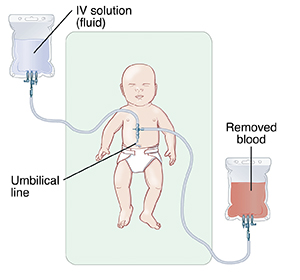
Treatment in the most severe cases may involve removing some of the baby's blood and replacing it with fluid through an IV line. This waters down (dilutes) the blood, so red blood cells are less concentrated. This treatment is called a partial exchange transfusion.
What are the long-term effects?
In most cases, polycythemia has no lasting effects. As the extra red blood cells break down, the baby will probably have yellowing of the skin (jaundice) for a short time. This is normal. If a blood clot (thrombus) or other problems occurred because of hyperviscosity, the baby may have complications. These could include stroke or organ damage. But these are very uncommon. Talk with the healthcare provider about how your baby is likely to progress.
Featured in


Related Articles
Polycythemia Vera in Children
Polycythemia vera is a serious, but very rare blood disorder in children. Learn about causes, symptoms, diagnosis, and treatment.
Vitamin K Deficiency Bleeding (VKDB) in Newborns
Vitamin K deficiency bleeding is a problem that occurs in some newborns. It happens during the first few days of life. This condition used to be called hemorrhagic disease of the newborn.
Thrombocytopenia in the Newborn
Thrombocytopenia means that a newborn baby has too few platelets in their blood. Platelets are blood cells that help the blood clot. They are made in the bone marrow.
Sickle Cell Disease
Sickle cell disease (SCD) is an inherited blood disorder that causes the body to make abnormal hemoglobin. This is the protein in red blood cells that carries oxygen to all parts of your body. Read on to learn more.


