Cystic fibrosis (CF) is an inherited disease that causes problems in the body's cells that make salt, water, and mucus.
CF is caused by a change in the CFTR gene. CFTR stands for cystic fibrosis transmembrane conductance regulator. This change, or mutation, causes a problem in the CFTR protein that controls the flow of water and salt in and out of the body's cells. If you have CF, this protein doesn’t work right. So mucus and other secretions become thick and sticky.
Improved treatments can help people with CF live longer and healthier lives. Many people with CF live past age 30. Life expectancy is improving with continued development of new treatments.
Some people who have advanced CF may be considered for lung transplant. But this doesn't cure CF or stop it from harming other parts of the body.
You can also have problems in your upper respiratory tract. You can develop nasal polyps. These are small growths of tissue from the lining of the nose that extend into the nasal cavity. Sometimes, these polyps must be taken out by a health care provider. You may also have sinus infections.
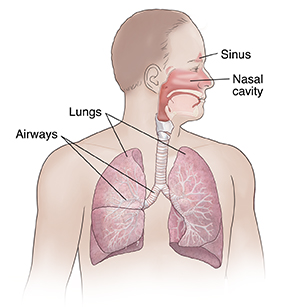
CF’s effects on the respiratory system also can cause these symptoms:
-
Chronic cough
-
Coughing up blood
-
Collapsed lung
-
A rounding and enlargement of the fingers and toes (clubbing)
-
Frequent lung infections with thick phlegm
-
Heart enlargement
-
Shortness of breath
-
Fever
-
Loss of appetite
-
Weight loss
-
Wheezing
-
Inflamed nasal sinuses (sinusitis)

Related Articles
Lung Cancer: Managing Shortness of Breath
Dyspnea is the technical word for difficulty breathing. It's a common symptom in people who have lung cancer or have cancer that has spread to the lungs.
COPD: Coping With Mucus
When you have COPD, you may have extra mucus. Learn about coping with extra mucus, including treatment and self-care tips.
Shortness of Breath: Maximizing Your Energy
When you have lung problems, you can help yourself feel better by conserving your energy. Pacing yourself, simplifying tasks, and not bending and lifting will let you do more without getting short of breath.
Exercising with Chronic Lung Disease: Taking the First Step
Before you start exercising, the pulmonary rehab team will assess your needs. If you have joint pain or any other health problems, be sure to discuss them with the team.


