Respirators that cover the nose and mouth are called half-mask respirators. Those that cover the face, including the eyes, are called full-face respirators. Both types use any mix of prefilters, filters, and cartridges. The type of filter or cartridge needed depends on the hazard.
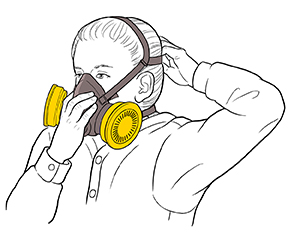
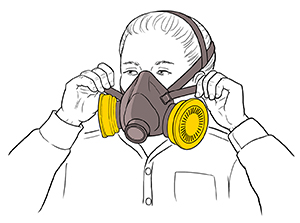
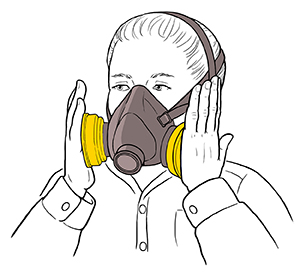
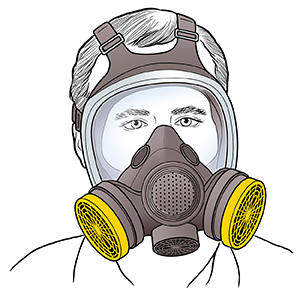
Warning
Don't wear a half-mask or full-face respirator if you may be exposed to gases and vapors that your cartridge can't protect you against. Also, don't wear it in places without enough oxygen or other situations that are immediately dangerous to life or health (IDLH).
How to care for them
Take out the filters and cartridges. Then wash respirators in warm water with a mild soap. Or follow instructions from your employer or the manufacturer. Rinse in water. Then dry with a lint-free cloth or let it air-dry. Put the respirator in a bag. Store it in a cool, dry place. Replace filters and cartridges as directed by your employer or the manufacturer.

Related Articles
Maintenance-Free Respirators
Maintenance-free respirators are one of the most common types. They are worn to capture particles.
Pulmonary Rehabilitation
Pulmonary rehabilitation (rehab) programs help people with chronic lung problems breathe better and improve their overall health and strength. The programs are led by healthcare professionals who are trained to treat people with lung disease. With their help, you'll learn about your condition and gain skills to help you manage it.
Taking Bronchodilators
Bronchodilators are medicines that help open the airways of your lungs. These medicines are used to ease breathing problems caused by lung diseases like asthma.
Your Tracheostomy Tube: Answers to Common Questions
With a tracheostomy, your healthcare provider makes a small hole (stoma) in your windpipe (trachea) through your neck. A tracheostomy tube (trach tube) is then placed into the stoma. Air goes into and out of your lungs through the tube. Here are answers to some common questions that people often ask about tracheostomy.


