Pregnancy begins when a woman’s egg and a man’s sperm join. This is called conception or fertilization.
The woman’s role in conception
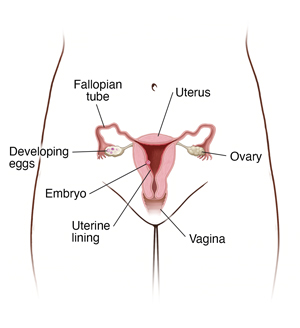
Each month, one of a woman’s ovaries releases a mature egg (ovulation). The egg travels to the fallopian tube. If sperm are present, one of them may join with the egg to form an embryo. The embryo then travels to the uterus. There, it implants in the uterine lining, where it grows to become a baby. If conception doesn’t occur, the egg and the uterine lining are shed during your period (menstruation). A new cycle begins.
The man’s role in conception
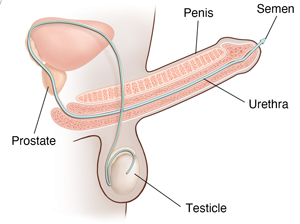
Sperm are made in a man’s testicles. Fluid made by the prostate gland combines with sperm to form semen. During a man’s orgasm, semen flows to the urethra and out of the penis (ejaculation). If the semen was ejaculated in or near a woman’s vagina, sperm may travel into the uterus and the fallopian tubes. There, a sperm may join a mature egg to form an embryo. This results in pregnancy.

Related Articles
Discharge Instructions: Caring for Your Central Line
You are going home with a central line. This is a tube put in a vein that leads to your heart. It provides medicine during your treatment. Because a central line has a high infection risk, you must take extra care. This sheet will help you remember what to do at home.
Heart Disease Education
The heart is a muscle and needs its own supply of blood. Heart disease cuts down on the amount of blood the heart muscle gets. This can cause chest pain and even a heart attack. Here's what you need to know.
Staff Ed: Making Sure Your Patients Get Vaccines
The most important thing ensuring that patients get vaccines may be as simple as your direct and clear recommendation to them.
Understanding Zika
Zika is a virus spread through the bite of a mosquito. It may also be passed on through sexual contact and blood transfusions.


