Before trying these exercises, talk to your healthcare provider to make sure they are safe for you. Ask your healthcare provider how many times to do each exercise.
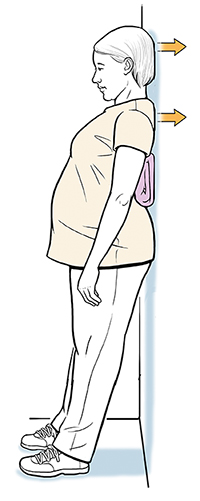
Wall stretch
This makes the muscles in your upper back stronger and looser:
-
Lean against a wall with a firm pillow or rolled towel under your shoulder blades. Your feet should be about 12 inches from the wall and shoulder-width apart. Point your chin down.
-
Breathe in. Push your shoulders, neck, and head against the wall. You will feel a stretch in your shoulders.
-
Hold for 5 counts. Then breathe out, and relax your shoulders and neck.
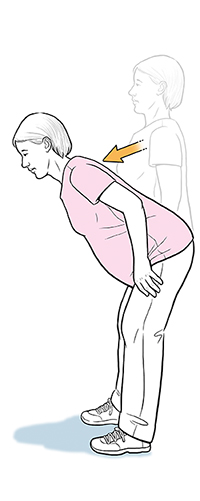
Body bend
This makes your back and buttocks muscles stronger:
-
Stand with your legs shoulder-width apart. Put your hands on your upper thighs and bend your knees slightly.
-
Slowly bend forward at the hips. Push your hips back and keep your shoulders up. Make sure your back is straight. You’ll feel a stretch in your upper thighs. You’ll also feel your back muscles holding you in position.
-
Hold for 5 counts, then straighten.

Related Articles
COVID-19: Pregnancy, Childbirth, and Postpartum
Researchers are still learning more about how COVID-19 affects pregnant women and their babies. Here is information to help you work with your health care team.
Nutrition During Pregnancy
Not only is eating nutritious food good for you and your baby, it also can ease some of the discomforts of pregnancy. A balanced diet can help minimize symptoms, such as nausea and constipation.
Understanding Risks of a Multiple Pregnancy
Having more than one baby is especially exciting—and complicated. Find out what to watch for, including a greater chance of anemia and preterm birth.
Fetal Heart Monitoring
Fetal heart rate monitoring measures the heart rate and rhythm of your baby (fetus). This lets your doctor see how your baby is doing.


