A baby (the fetus) often moves down between the pelvic bones (descend) before birth. If this is your first pregnancy, this may happen 2 to 4 weeks before labor. With repeat pregnancies, the baby may not “drop” until labor begins. The baby usually moves down headfirst. If your baby is not in a safe position for birth, or if there is a problem with the placenta, you may need special care. A cesarean section delivery may be needed.
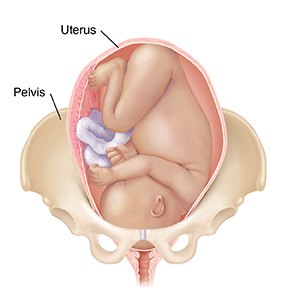
Conditions that require special care
Cephalopelvic disproportion (CPD). Baby’s head or body is too big for the pelvis.
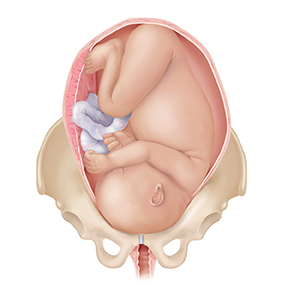
Breech position. Baby is positioned with feet or buttocks first.
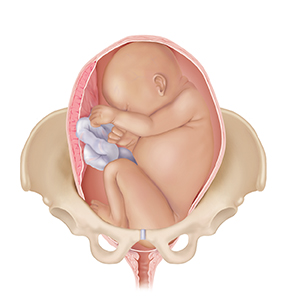
Transverse position. Baby lies horizontally across the pelvis.
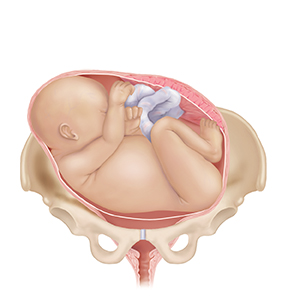
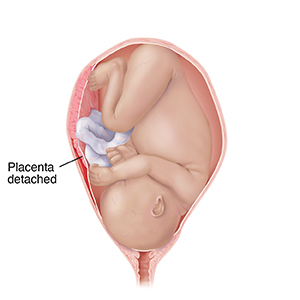
Placental abruption. Placenta separates from the uterus.
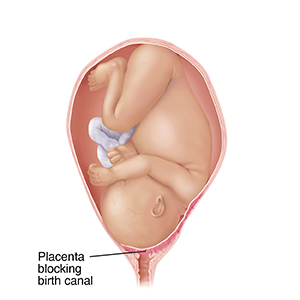
Placenta previa. Placenta blocks the cervix.

Related Articles
Taking a Sitz Bath
A sitz bath is a type of therapy done by sitting in warm, shallow water. Learn why and how a sitz bath is done.
Prenatal Medical Care
Learn about prenatal medical care, including why it's important, who provides it, and what happens during visits.
Postpartum Depression: Treatment
Learn about treatment options for postpartum depression. In most cases, medicines to treat depression can be used when you're breastfeeding.
Labor: Preparing for the Hospital
You may be told to call your healthcare provider when it becomes hard to walk or talk during contractions or if your amniotic sac breaks.


