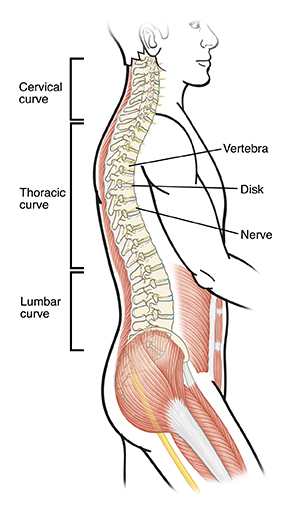
An unhealthy spine often starts with bad habits. Poor movement patterns and posture problems are common causes of back pain. Disk, bone, nerve, and soft tissue problems can all be affected by poor posture. They can lead to pain, stiffness, and other symptoms.
Poor posture backfires
Poor posture can cause pain. Too much slouching puts increased pressure on the disks. An excessive lumbar curve can overload and inflame the vertebrae. As a result, the back muscles may tighten or spasm to “splint” and protect the spine. This adds to the pain you feel.
Correct posture: The key to safe movement
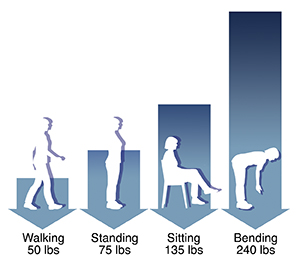
Your spine bears your weight throughout the day. This is true whether you’re sleeping, standing, or bending. Certain positions strain your spine more than others. But by maintaining correct posture in all positions, you can reduce the stress on your spine.
To improve your standing posture, follow these steps:
|
|


Related Articles
Protecting Your Neck: Posture and Body Mechanics
Protecting your neck from injuries and pain involves practicing good posture and body mechanics.
Back Safety: Turning
Protect your back while you stand or turn. Turning can twist your spine if you don't do it correctly.
Sling and Swathe
Sling and swathe is used to support your arm and hold it closely against your body after an injury.
Hip Safety: Using the Toilet
Read this for some tips to help you use the toilet safely after hip surgery.