Many treatments can help reduce pain and swelling in your knee. Your healthcare provider may suggest one or more of the following treatments:
-
Icing your knee. This helps reduce swelling. You may be asked to ice your knee once a day or more. Apply ice for about 15 to 20 minutes at a time, with at least 40 minutes between sessions. To make an ice pack, put ice cubes in a plastic bag that seals at the top. Wrap the bag in a clean, thin towel or cloth. Never put ice or an ice pack directly on your skin.
-
Keeping your leg raised up higher than your heart. This helps excess fluid flow out of your knee joint to reduce swelling.
-
Compression. This means wrapping an elastic bandage or neoprene sleeve snugly around your knees. It keeps fluid from collecting in and around your knee joint.
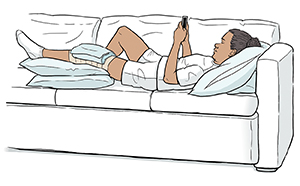
-
Electrical stimulation. This is done by a physical therapist or athletic trainer. It can help reduce excess fluid in your knee joint.
-
Anti-inflammatory medicines. These may be prescribed by your healthcare provider. You may take pills or get shots (injections) in your knee.
-
Isometric (contracting) exercises. These strengthen the muscles that support your knee joint. They also help reduce excess fluid in your knee.


Related Articles
Back Safety: Sitting
Sitting can strain your back if you don't do it right. Learn the right moves to protect your back.
The Side-Bend Stretch: A Gentle Exercise
Follow these step-by-step instructions for the side-bend stretch. This exercise stretches and strengthens the intercostal muscles, which help support the ribs.
Quadruped Hip Abduction (Strength)
This exercise helps strengthen your quads.
Standing with Crutches (Non-Weight Bearing)
These images show you how to stand using crutches.


