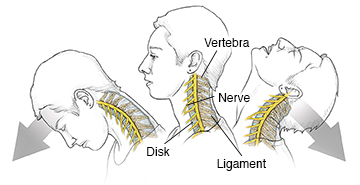
When one car hits another, each person’s body is thrown toward the impact, then away from it. This is whiplash. Even at slow speeds, the force puts stress and strain on the spine. This is especially true for the neck. The weight of the head stretches and damages muscles and ligaments. It may pull spinal bones out of line. The bones that protect your spinal cord (vertebrae) can be forced out of position. Disks are the spine's shock absorbers. They can bulge, rupture, or wear down. Nerves can get pinched or inflamed. And muscles and ligaments can be stretched or torn.
Symptoms of whiplash
A wide array of symptoms can follow an auto accident. Symptoms may appear right away. Or they may be delayed for several days. Symptoms may include:
-
Pain, especially in your neck, shoulder, arm, or lower back
-
Arm or leg numbness
-
Stiffness
-
Headache
-
Dizziness
Treating whiplash
You may be asked to do one or more of the following:
-
Ice the injured area for 24 to 48 hours. Do this for
20 minutes. Repeat5 times a day. -
After 48 hours, put moist heat on the injured area for
20 minutes. Repeat5 times a day. -
Wear a cervical (neck) collar for as long as recommended.
-
Take nonsteroidal anti-inflammatory drugs (NSAIDs) or muscle relaxants as directed by your healthcare provider.
-
Call your healthcare provider if you have numbness or weakness in your limbs. This can be a sign of nerve injury.


Related Articles
Understanding a Wrist Sprain
A wrist sprain can be painful. It can also limit movement and use of the wrist and hand.
Biceps Tendon Rupture
A biceps tendon connects the biceps muscle to the bones at the shoulder and elbow. This tendon can fray from heavy use over time and it can completely rupture or tear from injury, such as from lifting a heavy object.
Stress Fracture
A stress fracture is a very small, fine break in a bone. They often occur in the bones of the lower legs and feet.They are common in high-impact sports.
Cubital Tunnel Syndrome
Cubital tunnel syndrome happens when the ulnar nerve, which passes through the inside of the elbow, is injured and becomes inflamed, swollen, and irritated. Learn more about this condition, including the symptoms, how it's diagnosed and treated, and what you can do to help prevent it.


