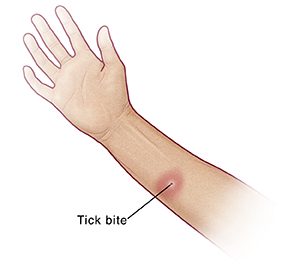
Ticks are small arachnids that feed on the blood of rodents, rabbits, birds, deer, dogs and humans. The bite may cause a small reaction like that of a spider, with a small amount of limited redness, itching and slight swelling. Sometimes there is no local reaction.
Most tick bites are harmless. But some ticks carry diseases, such as Lyme disease or Rocky Mountain spotted fever. These can be passed to people at the time of the bite. Lyme disease is of greatest concern. Right now you have no symptoms of Lyme disease or other serious reaction to the bite. It's important to watch for the warning signs, which could appear days to months after the tick bite.
Home care
These guidelines can help you care for your bite at home:
-
If itching is a problem, don't wear tight clothing or anything that heats up your skin. This includes hot showers or baths and direct sunlight. This often makes the itching worse.
-
An ice pack will reduce local areas of redness and itching. Make your own ice pack by putting ice cubes in a zip-top plastic bag and wrapping it in a thin towel.
-
You can also use an oral antihistamine with diphenhydramine for itching if your healthcare provider didn't give you another antihistamine. It's available at pharmacies and grocery stores. Use caution because this medicine may cause drowsiness. If symptoms continue, talk with your healthcare provider or pharmacist about other over-the counter or prescription medicines that may be helpful.
-
Your healthcare provider may prescribe antibiotics to reduce your risk of getting Lyme disease. It's very important that you take them exactly as directed until they are completely finished.
Follow-up care
Follow up with your healthcare provider, or as advised.
Call 911
Call
-
Irregular or rapid heartbeat
-
Numbness, tingling, or weakness in the arms or legs
-
Shortness of breath
When to get medical advice
Call your healthcare provider right away if any of the following occur:
Signs of local infection. Watch for these during the next few days:
-
Increasing redness around the bite site
-
Increased pain or swelling
-
Fever over 100.4°F (38°C), or as directed by your healthcare provider
-
Fluid draining from the bite area
Signs of tick-related disease. Watch for these over the next few days to months:
-
Rash that is new or getting worse
-
Circular, red, ring-like rash appears at the bite area within 1 to 4 weeks. This rash sometimes clears in the middle and looks like a red halo. This is called a target lesion because it looks like a bullseye-type target.
-
Tiredness, fever or chills, nausea or vomiting
-
Neck pain or stiffness, headache, or confusion
-
Muscle or bone aches
-
Joint pain or swelling, especially in the knee
-
Weakness on one side of the face with facial droop.
-
A spotted rash that starts on or includes the palms of the hands and soles of the feet

Related Articles
Infected Burn, With Cream or Ointment and Dressing
Your burn has become infected. This is often because skin germs (bacteria) have gotten into the burn area. Here's how to care for the burn at home.
COVID-19
2019 Novel Coronavirus (2019-nCoV), also known as COVID-19, is a virus that causes a respiratory illness. Coronaviruses are a very common cause of bronchitis. They may sometimes cause lung infection (pneumonia).
Tapeworm Infection
Tapeworm is a parasite that grows in the intestines (gut). They can live in your body for many years, or they can leave the body during a bowel movement. Tapeworms can cause an infection.
What Is Pneumonia?
Pneumonia is a serious lung infection. Many cases of pneumonia are caused by bacteria or viruses. Read on to learn more.


