What is it?
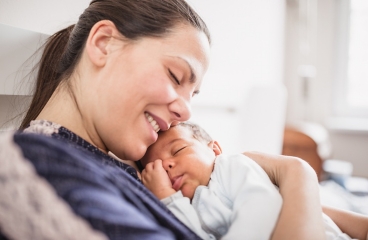
A brief resolved unexplained event (BRUE) is a sudden change in how your baby breathes, looks, or responds.
For example, your baby may start to have trouble breathing, or your baby's skin may turn blue or pale. It can
be scary to see this happen. But the change is brief—usually less than a minute—and your baby quickly gets
better.
Why a BRUE (say "broo") happens isn't known. It can't be explained by another problem, such as an illness,
infection, or injury.
In most cases after a BRUE, your baby doesn't need tests or a stay in the hospital.
What are the symptoms?
The symptoms of a BRUE start and end suddenly.
During a BRUE, your baby may:
-
Turn blue or pale around the face, belly, or back.
-
Have trouble breathing, like breathing too slowly or too quickly.
-
Become stiff or floppy in their body.
-
Seem too sleepy or pass out (lose consciousness).
How is it diagnosed?
A BRUE usually isn't diagnosed with testing. Instead, to find out if your baby had a BRUE, the doctor will:
-
Ask about the changes you saw in your baby.
-
Do a physical exam.
-
Ask about your baby's health and the health of family members.
If the doctor can't find a cause for your baby's symptoms, then your baby is diagnosed with a BRUE.
How can you care for your infant at home?
Work with your doctor to make a plan that keeps your baby healthy, happy, and safe.
Here are some steps you can take:
-
Be sure to go to all follow-up appointments.
-
Learn how to do CPR and rescue breathing. It's important to know this in case your baby stops breathing.
To find a CPR course near you, call your local hospital or the local branch of the Red Cross or American
Heart Association. -
Always put your baby to sleep on their back, not on their side or tummy. Put your baby in a crib or
bassinet in your bedroom for the first 6 months. Keep soft items like stuffed animals, pillows, and blankets
out of the crib. Use a firm mattress with a fitted sheet. Don't use sleep positioners, head-shaping pillows,
or bumper pads. -
Make sure that your baby gets regular checkups and recommended vaccines to protect against serious
illness.
When should you call for help?

anytime you think your baby may need emergency care. For example, call if:
|
|
|
|
|
|
|
|
|
|
|
|
|
|
|
|
|
|
Call your doctor now or seek immediate medical care if:
|
|
|
|
|
|
|
|
|
|
|
|
|
|
|
|
|
|
|
|
|
|
|
|
Current as of: October 24, 2023
Content Version: 14.0
Care instructions adapted under license by your
healthcare professional. If you have questions about a medical condition or this instruction, always ask
your healthcare professional. Healthwise, Incorporated disclaims any warranty or liability for your use of
this information.
Featured in

Related Articles
Newborn Sleep Patterns
New parents are often unsure how long and how often a newborn should sleep. Read on to learn about general newborn sleep patterns, the quiet alert phases, and how to help your baby fall asleep.
Conjunctivitis (Newborn)
Conjunctivitis is an irritation of the conjunctiva. In newborns, conjunctivitis is often caused by a blocked tear duct. Learn how to care for your baby.
Supportive Treatment for a Cleft Lip or Palate
Treatment can help your child develop physically and emotionally. This sheet gives you tips on how to prepare your child for these important treatments.
Very Low Birth Weight
Very low birth weight is a term used to describe babies who are born weighing less than 3 pounds, 4 ounces. It is very rare that babies are born this tiny. Only about 1 in 100 babies born in the U.S. are very low birth weight.


