Gender words are used here to talk about anatomy and health risk. Use this information in a way that works best for you and your doctor as you talk about your care.
Stress urinary incontinence is a common type of bladder control problem in females. It happens less often in males, and due to different reasons. It occurs when urine leaks out when there is sudden pressure on the belly (abdomen). This condition may occur when the structures that help hold urine in your bladder are weak.
What are the symptoms of stress incontinence?
If you have stress incontinence, you may leak low to moderate amounts of urine when you:
- Cough, sneeze, or laugh
- Lift something heavy, bend, or change positions
- Exercise
Normal urine control
The bladder holds urine until you're ready to let it flow out. These structures help:
- The pelvic floor muscles and connective tissue. These help hold the pelvic organs in place. When the muscles and connective tissue are strong, the urethra and bladder are well supported. This helps keep the urethra closed. Then urine doesn't leak.
- The urethral sphincter. This is a band of muscles around the urethra. When these muscles are strong, they keep urine in the bladder. These muscles relax when you want urine to flow out.
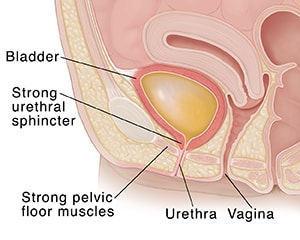
If urine leaks out
The pelvic floor muscles and connective tissue may stretch, weaken, or tear. Weak or torn structures can't support the urethra and bladder. The urethral sphincter may also weaken. These changes can cause urine to leak. The changes may be caused by:
- Pregnancy and vaginal or cesarean section delivery
- Constant coughing (such as with bronchitis or smoking)
- Being overweight or obese
- Hysterectomy or other pelvic surgery
- Nerve damage
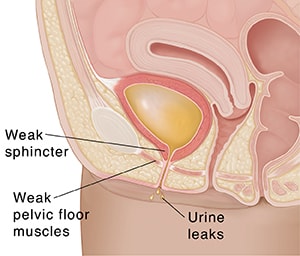
Treatment
Many treatments are available, including:
- Lifestyle changes (reducing weight, quitting smoking, reducing drinks with caffeine or alcohol, and doing bladder-strengthening exercises)
- Surgery
- Medical devices, such as pessaries

Related Articles
Understanding Urinary Tract Infections (UTIs)
Most UTIs are caused by bacteria. But they may also be caused by viruses or fungi. Bacteria from the bowel are the most common source of infection. Here's what you need to know.
Anatomy of the Female Urinary Tract
A helpful diagram and explanation of the female urinary tract.
Female Urinary Tract Infections (UTIs)
Urinary tract infections (UTIs) are most often caused by bacteria. Most UTIs are treated with antibiotics. Read this to learn more about this condition.
Urinary Incontinence
Urinary incontinence is the loss of urine control. It may be a short-term problem caused by another health issue or a long-term problem that you’ll have to manage. Learn more about this condition, including what causes it, who is at risk, what the symptoms are, and how it's diagnosed and treated.


