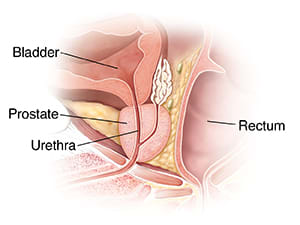
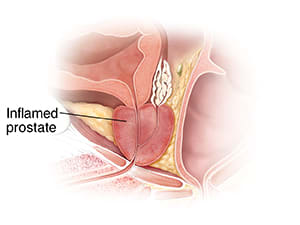
The prostate gland is part of the male reproductive system. The gland sits just below the bladder. It surrounds the urethra. This is the tube that carries urine and semen out of the body. Bacterial prostatitis is an infection of the prostate that causes the prostate to become painful and swollen. The problem often occurs suddenly with possible severe symptoms noted below.
Causes and symptoms
Bacterial prostatitis is caused by infection with germs (bacteria). This infection makes the prostate swell. This squeezes the urethra, narrowing or blocking it. It can be caused by a biopsy or surgery, urine blockage, an injury to the genitals, or a sexually transmitted infection (STI). Symptoms may be bad. They can include:
- Fever and chills.
- Low back pain.
- Having to pee often.
- Pain when peeing.
- A weaker pee stream.
- Needing to strain to pee.
- Inability to pee.
Treatment
The infection is treated with antibiotics. Take all of the medicine until it's gone, even if you start to feel better. If you don't, the infection may come back. And it may be harder to treat. Your doctor may also suggest resting, pain medicine, stool softeners, and drinking more fluid. Follow any instructions you're given.
Chronic bacterial prostatitis
Prostatitis can turn into a long-term (chronic) problem. In this case, the prostate stays swollen and inflamed despite treatment with antibiotics. One possible cause is repeated infections that may not have fully resolved. Symptoms include pain and burning when peeing, and needing to pee often. It may also cause lower belly or back pain. If you have this problem, your doctor will talk with you about a treatment plan. Treatment is often taking antibiotics for 6 to 12 weeks. In addition to antibiotics, other treatments may include anti-inflammatory medicines, muscle relaxants, and sitz baths.

Related Articles
Understanding Bladder Stones
Bladder stones are small deposits of crystals made from minerals and proteins that form in the urine. They may form when a small amount of urine stays in your bladder after urinating.
Benign Prostatic Hyperplasia (BPH)
Benign prostatic hyperplasia (BPH) is also called benign prostatic hypertrophy. It means that the prostate gland has become very large and may cause problems passing urine. BPH is not cancer. It's a common part of aging.
Prostatitis
Prostatitis is inflammation of the prostate gland and sometimes the area around it. It is not cancer. Learn more about this condition, including what it is, what causes it, what the symptoms are, and how it's diagnosed and treated.
Impotence (Erectile Dysfunction)
Erectile dysfunction (ED) or impotence means you can’t get an erection. It can also mean you aren't happy with the size or hardness of your erections, or how long your erections last. Read on to learn more about this condition.


