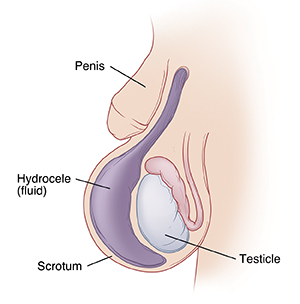
Hydrocele is a collection of fluid in the scrotum surrounding the testicle. This sometimes happens to baby boys.
This could happen because the baby’s abdominal wall wasn’t fully developed at birth. Or there may be an opening between the abdomen and scrotum that didn’t close as it should have after birth.
When is a hydrocele treated?
Hydrocele often goes away by itself, as the body slowly absorbs the abdominal fluid. But in some cases, surgery is needed. The hydrocele will be treated if:
-
The amount of fluid increases, making the scrotum large and firm.
-
The hydrocele becomes infected, painful, or uncomfortable.
-
The fluid isn’t absorbed within the baby’s first year of life.
-
The baby also has a loop of bowel (a hernia) extending into the same area.
What are the long-term effects?
After the hydrocele goes away or is treated, lasting problems are rare.
Signs of a problem
If you see any of these signs, contact your baby’s health care provider or get medical care right away:
-
The hydrocele gets bigger or red.
-
Your baby cries more than normal and can’t be soothed.
-
Your baby cries or fusses when you touch the hydrocele.
Featured in

Related Articles
Balanitis
Balanitis is an inflammation of the head of the penis. It can happen because of a buildup of germs (bacteria, viruses, or fungi) under the foreskin, or exposure to soaps and other chemicals. Learn how to care for yourself at home.
Balanoposthitis (Child)
Sometimes both the glans and foreskin can become inflamed or infected. This condition is called balanoposthitis. It may be caused by bacteria, fungus, or yeast.
Exstrophy of the Bladder and Epispadias in Children
Exstrophy of the bladder is when a baby's bladder has grown inside out and is sticking through the belly wall. It often occurs together with epispadias. This is when the opening of the tube that carries urine out of the body (the urethra) is in the wrong place.
Neurogenic Bladder in Children
Neurogenic bladder means the bladder doesn't work normally because of nerve damage. It causes a child to have problems with holding or releasing urine.


