A slight natural curve to the erect penis is usually normal. But curvature that causes pain and trouble having sex is a problem. The development of painful curvature is called Peyronie disease. Peyronie disease is due to scar tissue (plaque) that forms inside the penis.
Your penile anatomy
The body (shaft) of the penis is made of two columns of spongy tissue called the corpora cavernosa. During an erection, this tissue fills with blood, swells, and becomes rigid, creating an erection. A dense sheath of elastic tissue called the tunica surrounds the corpora. This tissue stretches as the penis becomes erect.
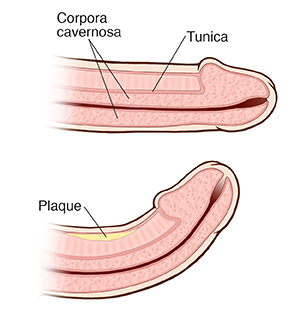
Painful curvature
Peyronie disease occurs when a scar (plaque) forms on the fibrous sheath of tissue surrounding the corpora. The scar can form on any part of the penis. But it's often found on the top or bottom. The scarred area of the tunica loses its elasticity, so it doesn’t stretch when the corpora swells. Because the tunica doesn’t stretch in that area, the erect penis curves in the direction of the scar.
Possible causes
No one is sure just what causes the plaque. It may be the result of an injury to the erect penis or a blow to the groin. The plaque may occur because of a problem with your immune system. But two things are certain: Peyronie disease is not caused by sexually transmitted infections. And it's not cancer.
Symptoms of Peyronie disease
Symptoms of Peyronie disease include:
-
Curvature of the penis during erection (which may interfere with sex).
-
Pain during erection.
-
Soft erections.
-
Shortening or narrowing of the penis.
-
A hard area usually felt below the skin of the penis in the area of the plaque.

Related Articles
Understanding Bladder Stones
Bladder stones are small deposits of crystals made from minerals and proteins that form in the urine. They may form when a small amount of urine stays in your bladder after urinating.
What Is Interstitial Cystitis?
Interstitial cystitis (IC) is a chronic and painful condition of the bladder. People with IC have a bladder wall that is tender and easily irritated, leading to uncomfortable symptoms. Although IC currently has no cure, the symptoms can be managed to help you feel better and live more comfortably.
What Is a Varicocele?
Read on to learn details about a varicocele, from symptoms to how it can affect sperm count.
Understanding Urinary Tract Infections (UTIs)
Most UTIs are caused by bacteria. But they may also be caused by viruses or fungi. Bacteria from the bowel are the most common source of infection. Here's what you need to know.


