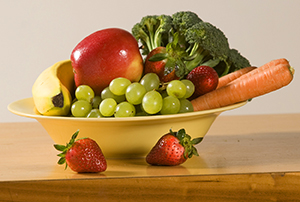
Fresh fruits and vegetables are great quick food choices. They need little or no preparation. And they are loaded with important nutrients.
|
True |
False |
|
|
☐ |
☐ |
1. Eating cabbage can help reduce your risk for some cancers. |
|
☐ |
☐ |
2. Dietary fiber, found in most fresh fruits and vegetables, is also found in animal products. |
|
☐ |
☐ |
3. The deeper the color of a vegetable, the more beta-carotene it has. |
|
☐ |
☐ |
4. A chili pepper has more vitamin C than an orange. |
|
☐ |
☐ |
5. You can enjoy a sweet dessert for under 100 calories. |
|
☐ |
☐ |
6. Fresh fruits and vegetables are made up mostly of water. |
|
☐ |
☐ |
7. Fresh fruits and vegetables have almost no sodium. |
|
☐ |
☐ |
8. Vegetables don't have calcium. |
|
☐ |
☐ |
9. The amount of water used to cook vegetables won’t affect their nutritional content. |
Answers
-
TRUE. Nutrition experts recommend eating cabbage and other cruciferous vegetables such as broccoli, cauliflower, and kale. They can reduce your risk for some types of cancer.
-
FALSE. Dietary fiber is not found in animal products. Whole grains, fruits, and vegetables are all good sources of dietary fiber.
-
TRUE. Foods with more beta-carotene are a deeper shade of yellow, orange, or green. Beta-carotene is an important nutrient for good health.
-
TRUE. One fresh chili pepper has almost 40% more vitamin C than an orange.
-
TRUE. Fresh fruit is a great dessert that is naturally sweet and low in calories. A cup of mixed fresh fruit can have between 65 and 100 calories.
-
TRUE. An average apple is 85% water plus vitamins, minerals, and carbohydrates.
-
TRUE. Almost all fresh fruits and vegetables are low in sodium.
-
FALSE. Good sources of calcium include broccoli, bok choy, and dark leafy greens (kale, mustard, and turnip greens).
-
FALSE. When cooking vegetables, use as little water as possible. This will help you from losing nutrients.

Related Articles
Daily Food Plan Worksheet: 2,400 Calories
Your calorie needs are about 2,400 calories a day. These are the USDA guidelines for your daily recommended amount of each food group.
Nutrition and the New Food Pyramid: Healthy Fats
Healthy fats include oils that are high in unsaturated fat, such as olive or canola oil. You can also find healthy fats in foods such as nuts, seeds, nut butters, avocados, and fatty fish. Healthy fats provide essential nutrients for your body.
Eating a High-Fiber Diet
Fiber is what gives strength and structure to plants. Most grains, beans, vegetables, and fruits contain fiber. Foods rich in fiber are often low in calories and fat, and they fill you up more. They may also reduce your risks for certain health problems.
Eating an Anti-Inflammatory Diet
This diet involves choosing a healthy variety of foods. It focuses on foods that may help reduce chronic (long-lasting) inflammation, such as fruits, vegetables, and whole grains.