To remove gloves without spreading germs, never touch your skin with the outside of either glove. Follow these steps:
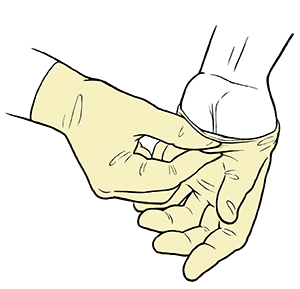
Step 1
-
Grasp the outside of one glove near your wrist.
-
Carefully pull the glove off, turning it inside out.
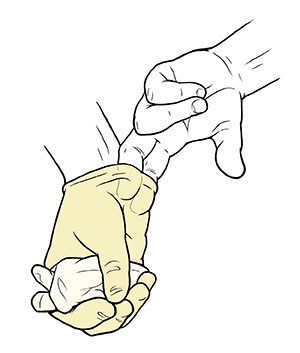
Step 2
-
Hold the glove in the palm of the still-gloved hand.
-
Slip 2 fingers under the wrist of the remaining glove.
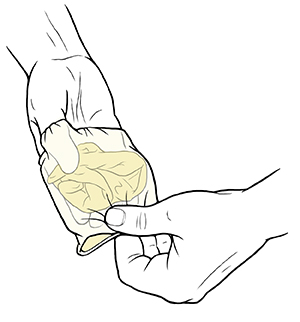
Step 3
-
Pull the glove until it comes off inside out.
-
The first glove should end up inside the glove you just took off.
-
Dispose of the gloves safely.
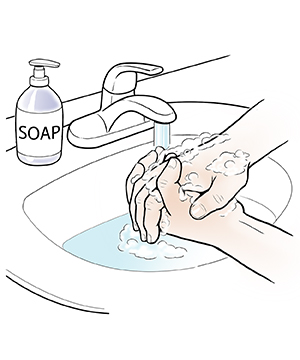
Step 4
-
Always wash your hands after removing gloves and before touching any objects or surfaces. Gloves can have holes in them that are too small to be seen.
When to wear gloves
Before putting on gloves, wash and dry your hands well. Cover scratches or scrapes with bandages.
-
Wear gloves whenever contact is possible with blood, all body fluids and substances (except sweat), broken skin, or mucous membranes.
-
Wear gloves when touching any item or area that may be contaminated.
-
Don't touch uncontaminated items with contaminated gloves.
-
Remove gloves right after use. Wash hands and put on clean gloves between patients and procedures. Don't reuse disposable gloves.

Related Articles
How to Cut Your Hospital Bills
While you may not be able to avoid a hospital stay, there are ways to trim the expenses.
Talking to Your Doctor: Play an Active Role
To get the most out of your health care, take an active role. This means thinking of every doctor as a partner in your care. Here are things you can do to help that partnership go smoothly.
Communicating with Others About Your Health
Only you can decide whether to tell others about your condition. You may feel that your health is a private matter. Maybe you have a hard time deciding who to tell and how much to say. Or, you might find that talking makes you feel better. The choice is yours.
How to Get Medicines for Less
Here are strategies from the Food and Drug Administration to help you cut your prescription costs by 50% or more.


