What is a brain tumor?
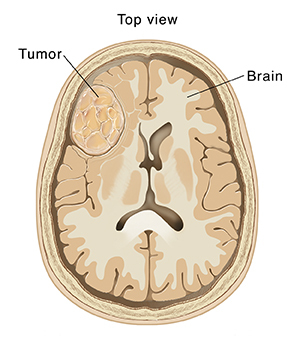
A brain tumor is a mass of abnormal cells in the brain. There are many types of brain tumors. They may start in the brain (primary tumors) or travel to the brain from another part of the body (metastatic tumors). Brain tumors may be slow growing, not likely to spread, and not cancer (benign). Or they may be quick growing, cancer (malignant), and able to spread to other parts of the brain. Both kinds of brain tumors, benign and malignant, can cause serious problems by pressing on and damaging normal brain tissue. Symptoms will depend on the type of tumor, how big it is, and where it is in the brain.
What causes symptoms?
Brain tumors can cause many different symptoms. Things such as where the tumor is and how fast it grows (aggressiveness) are important. A tumor can cause symptoms in a variety of ways. These include:
-
Destroy normal brain.
-
Compress normal brain.
-
Cause swelling of the brain.
-
Increase pressure in the head (intracranial pressure).
-
Cause abnormal electrical activity in the brain (epilepsy).
-
Cause bleeding in the brain (intracranial hemorrhage).
-
Cause hydrocephalus by blocking the normal flow of cerebrospinal fluid (CSF). CSF is a clear fluid that bathes, supports, and cushions the brain and spinal cord.
What are the symptoms?
The most common symptoms of brain tumors are:
-
Headaches that may be worse in the morning or with activity.
-
Trouble thinking, remembering, or talking.
-
Changes in personality, mood, and behavior.
-
Vision, speech, or hearing problems.
-
Seizures or convulsions.
-
Paralysis, numbness, or weakness in one part or on one side of the body.
-
Loss of balance, lack of coordination, or problems walking.
-
Nausea and vomiting that may be worse in the morning.
-
Hormone problems (many types).
-
Drowsiness.
There are many different types of brain tumors with many different symptoms, treatments, and outcomes. Contact your health care provider if you have any questions about your symptoms and if they could be a sign of a brain tumor.
Online Medical Reviewer: Jessica Gotwals RN BSN MPH
Online Medical Reviewer: Luc Jasmin MD
Online Medical Reviewer: Sabrina Felson MD
Date Last Reviewed: 03/01/2025
© 2000-2026 The StayWell Company, LLC. All rights reserved. This information is not intended as a substitute for professional medical care. Always follow your healthcare professional's instructions.
Related Articles
What Is Non-Hodgkin Lymphoma?
Non-Hodgkin lymphoma is a type of cancer. Learn about how it forms and treatment choices.
Basics of Brain Tumors
A brain tumor starts when cells in the brain change and grow out of control. As they continue to grow, they form a mass of cells that becomes a tumor. Learn about the types of brain tumors and symptoms.
Abdominal Ultrasound
Abdominal ultrasound is an imaging test that uses sound waves to form pictures of your abdominal organs. It can help detect organ problems, such as gallstones, kidney stones, or liver disease.
Anatomy of the Brain
Learn about the brain, its parts, each part's functions, and how the brain is protected.


