The length of your hospital stay depends on the type of surgery you have. You'll be given instructions to follow during recovery. The amount of time needed to fully recover varies from person to person. It's normal to be very tired the first week or two. Try to be patient with yourself as you heal. Take the time you need to adjust to the changes in your life and body.
Right after surgery
You'll wake up in a recovery room, where you'll be closely watched. You will have an I.V. (intravenous) line for medicines and fluids. Once you're fully awake, you'll be taken to a hospital room, where you can have visitors. You may need to stay in the hospital for a day or two.
Expect to be up and walking soon after surgery. You'll be given pain medicine if you need it. It's important to get out of bed and move around, even though it may be hard to do. Activity can help get your digestive tract moving, help prevent blood clots, and help get air moving normally through your lungs. Use the pain medicine to be comfortable so you can get up.
Your first look
You will have bandages on your chest after surgery. You may go home with bandages. Or they may be removed before you leave the hospital. Looking at your incision for the first time can be hard. You may feel most at ease taking this step at home. You may want to be alone, or you may want family or a friend to support you. Either way is okay. At first, try looking down at your body rather than in the mirror.
There will be some bruising, redness, stiffness, tightness, and swelling that will get better as you heal. It can take up to a year for you to fully heal and know what your chest will look and feel like.
At home
Plan on having someone stay with you for a few days after you go home. You'll be given some prescription medicines to take. Make sure you know what they're for and when to take them.
Before leaving the hospital, you'll be taught how to take care of your incision. You may have:
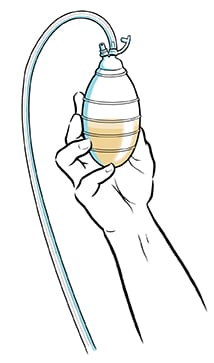
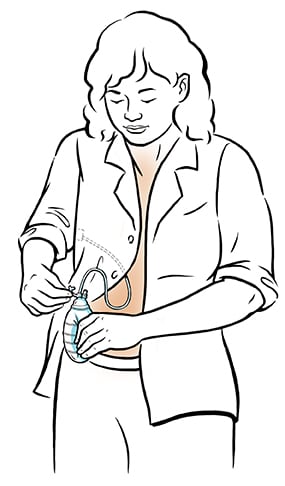
- One or two soft plastic drains. These draw off fluid from behind and around the incision. Be sure to empty your drain at least every
8 hours, or as directed. Remove the plug and empty the contents into the container provided. Measure the amount of fluid as directed. Write it down to show your doctor. The fluid may look bloody or yellow. Flush it in the toilet, rinse out the measuring container, and let it air dry until next time. The drainage will decrease as you heal. The drains will be removed in your surgeon's office. - A bandage (dressing) over your incision. Care for the dressing or bandage as directed. You may have an elastic wrap that goes around your chest to help hold it in place. Take sponge baths at first to prevent getting your bandage wet. Your doctor will tell you when it's okay to take off the bandage and when it's okay to stop using one.
- Stitches at the incision site. They may dissolve on their own. Or they may be removed at your follow-up visit. Ask your doctor what to expect.
- Pain medicines to help relieve any discomfort. Medicines should be taken as directed. Ask what side effects you should watch for and what you can do to help prevent them.
- An activity or exercise plan. Make sure you know what you can and can't do. You'll be given exercises to help regain normal movement in your shoulder, build your arm and chest muscle strength, and help decrease swelling. This is an important part of your recovery.
- A follow-up appointment. Find out when you'll need to see your doctor next and what to expect as the next part of your treatment.
Talk with your doctor about what problems to look for and when to call them. Know what number to call anytime you have questions or problems, including after office hours and on weekends and holidays.
Featured in
Online Medical Reviewer: Jessica Gotwals RN BSN MPH
Online Medical Reviewer: Susan K. Dempsey-Walls RN
Online Medical Reviewer: Todd Campbell MD
Date Last Reviewed: 09/01/2025
© 2000-2026 The StayWell Company, LLC. All rights reserved. This information is not intended as a substitute for professional medical care. Always follow your healthcare professional's instructions.

Related Articles
Breast Reconstruction with Implants
Your surgeon can help you decide whether to have reconstructive surgery. You will be advised to wait if now is not the best time for you. Breast reconstruction can be done during or after a mastectomy. One kind of reconstruction is the breast implant.
Breast Reconstruction With Flap Procedures
A flap procedure uses your own tissue to form the shape of a breast. Some common types of flap procedures are the TRAM flap and the LD flap.
Should You Have BRCA Gene Testing?
This testing may be a good fit for someone who has a family history of breast or ovarian cancer.
What Is Breast Cancer?
Having breast cancer means cells in the breast have changed (mutated) and are growing out of control. Read on to learn about the different types and stages of breast cancer.


