Over time, diabetes can cause complications, or health problems, throughout the body. They are more likely to happen if your blood sugar is often too high. They can also happen if your diabetes isn't under good control. High blood sugar can damage blood vessels in your body over time. It's important to keep your blood sugar in your target range. This can help prevent or delay problems.
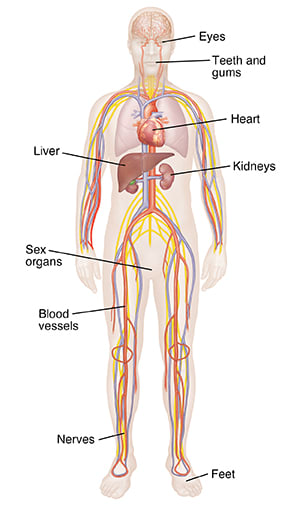
Possible complications
Diabetes can cause:
- Eye problems. These include damage to the blood vessels in the eyes, increased pressure in the eye, and clouding of the eye's lens. Eye problems can lead to bleeding and blindness over time.
- Tooth and gum problems. These can cause pain, infection, or loss of teeth and bone.
- Blood vessel disease. This can lead to circulation problems, heart attack, or stroke. You may need a limb removed because of poor blood flow to the skin.
- Problems with sexual function. This includes erectile dysfunction and sexual discomfort.
- Kidney disease. This can lead to kidney failure. You may need dialysis or a kidney transplant if this happens.
- Nerve problems. These can cause pain or loss of feeling in your feet and other parts of your body. This may lead to loss of a limb. Nerve damage may also cause hearing loss.
- High blood pressure. This health problem puts strain on your heart and blood vessels.
- Serious infections. These may lead to loss of toes, feet, or limbs.
- Metabolic dysfunction-associated steatotic liver disease. Having type 2 diabetes raises the risk for severe fat buildup in the liver.
- Muscle and bone problems. These include carpal tunnel syndrome, frozen shoulder, Dupuytren contractures in the fingers, fractures, and osteoporosis.
- Depression. Having a serious chronic illness like diabetes may increase stress levels. This can lead to depression and other mental health conditions.
How to prevent complications
You can help prevent serious complications by managing your blood sugar levels, blood pressure, and cholesterol. This can help you feel better and stay healthy. You can help control diabetes by tracking your blood sugar levels regularly as advised by your doctor.
Eat healthy foods and exercise to prevent weight gain. Stop all tobacco products if you smoke. This will greatly improve your overall health.
Go to all of your doctor appointments. Get the recommended health checks, such as blood and urine tests, blood pressure screenings, eye exams, foot checks, dental exams, and bone health tests. Also stay up-to-date on the recommended vaccines. Ask your doctor what vaccines you should have.
It's important to take medicine as directed by your doctor. Report any side effects as advised by your doctor. Tell your doctor if you have trouble staying at healthy blood sugar levels. Also tell them if you have more stress than usual.
Online Medical Reviewer: Michael Dansinger MD
Online Medical Reviewer: Raymond Kent Turley BSN MSN RN
Online Medical Reviewer: Rita Sather RN
Date Last Reviewed: 09/01/2025
© 2000-2026 The StayWell Company, LLC. All rights reserved. This information is not intended as a substitute for professional medical care. Always follow your healthcare professional's instructions.
Related Articles
Diabetes and Kidney Disease
By controlling diabetes, you can maintain a healthy blood sugar level and slow any kidney damage. Read on to learn more.
Hypoglycemia Caused by Oral Diabetes Medicine
Your diabetes medicine may cause low blood sugar or hypoglycemia. This sheet can tell you how to care for yourself to prevent low blood sugar.
What Are Pressure Injuries of the Foot?
Force or friction against the bottom of your foot can cause calluses and corns that can lead to pressure injuries. You can look for signs of pressure injuries when you check your feet.
Diabetic Retinopathy: Evaluating Your Eyes
Diabetic retinopathy is a condition that happens when diabetes harms blood vessels in the back of the eye. Learn what you can do to catch it early.


