Rectal bleeding is when blood passes through your rectum and anus. It can happen with or without a bowel movement. Rectal bleeding may be a sign of a serious problem in your rectum, colon, or upper GI tract. Call your health care provider right away if you have any rectal bleeding.
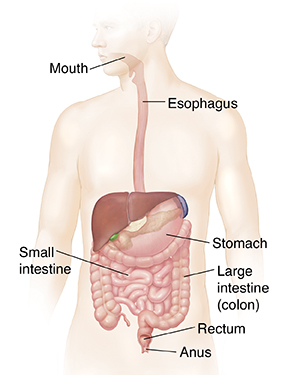
The GI tract
The gastrointestinal (GI) tract includes the:
-
Mouth.
-
Esophagus.
-
Stomach.
-
Small intestine.
-
Large intestine (colon).
-
Rectum.
-
Anus.
The food you eat is digested as it passes through the GI tract. Solid waste leaves the body through the rectum and anus.
Rectal bleeding and GI problems
The cause of rectal bleeding may be found in any part of the GI tract. The colon or rectum may be the site of your bleeding problem. Or bleeding may be due to problems farther up the GI tract, such as in the small intestine, duodenum, or stomach.
Causes of rectal bleeding
Possible causes include:
-
Swollen veins in the rectum and anus (hemorrhoids).
-
Tears in or near the anus (fissures).
-
Pockets in the colon wall that can bleed (diverticulosis).
-
Infection.
-
Low blood flow (ischemia).
-
Radiation damage.
-
Inflammatory bowel disease (Crohn's disease or ulcerative colitis).
-
Ulcers in the upper GI tract and inflammation of the large intestine.
-
Abnormal tissue growths (cancer tumors or polyps) in the GI tract.
-
A bulging rectum (rectal prolapse).
-
Abnormal blood vessels in the small intestine or in the colon.
Common symptoms
Common symptoms are:
-
Rectal pain, itching, or soreness.
-
Belly pain, including upper belly pain near the stomach (epigastric pain).
-
Small drops of blood that sometimes are seen on the stool or toilet paper.
-
Stool that looks red, black, or tarry.
Rectal bleeding can also happen without pain.

Related Articles
Nonspecific Vomiting and Diarrhea (Adult)
Vomiting and diarrhea can have many causes. Here's how to care for yourself and when to call for help.
When You Have Gastrointestinal (GI) Bleeding
Blood in your vomit or stool can be a sign of gastrointestinal (GI) bleeding. GI bleeding can be scary. But the cause may not be serious. Here's a look at the possible causes of GI bleeding, and the types of tests you can expect.
Excess Gas
Certain foods produce gas when digested. In some people, these foods make an excessive amount of gas. Read on to find out which foods to stay away from, and what other things may be causing gas.
Anal Itching (Pruritis Ani)
The skin around the anus can easily become irritated and inflamed. You may feel burning, soreness, and intense itching. There are many causes of anal itching.


