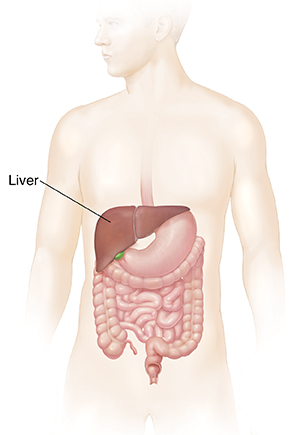
A liver abscess is a pocket of infected fluid (pus) that forms in the liver. It is caused by infection from germs such as bacteria, parasites, or fungus. It must be treated right away to prevent serious problems. It often causes symptoms such as:
-
Fever.
-
Belly (abdominal) pain.
-
Extreme tiredness (fatigue).
-
Loss of appetite.
-
Upset stomach (nausea).
-
Vomiting.
-
Diarrhea.
How to say it
AB-sehs
Why liver abscess treatment is done
A liver abscess is a severe infection. It can lead to serious problems and it can even cause death if it's not treated. It can harm tissue in the area where it’s found. It can also cause symptoms such as fever, pain, nausea, diarrhea, and loss of appetite. It can cause a severe infection throughout the body called sepsis. Treatment is done to cure the abscess, stop symptoms, and prevent death.
How liver abscess treatment is done
The type of treatment you have depends on what caused the abscess. It also depends on how many abscesses you have, and how big they are. Treatment usually includes antibiotics and draining the abscess.
-
Taking medicine. An abscess is treated with antibiotic or antifungal medicine, depending on what is causing the abscess. You will need to take medicine for a few weeks. You may take it by mouth as a pill or liquid. Or the medicine may be put into a vein through an I.V. (intravenous) tube.
-
Draining the abscess. This may be done in addition to taking medicine. Or it may be done if medicine doesn’t work or the infection causes other problems. There are several ways to drain a liver abscess. The health care provider may put a syringe needle through your skin into the abscess. The provider then uses the syringe to drain the fluid. This is called aspiration. Or the provider may put a thin wire through your skin. The provider uses CT scan or ultrasound to help place the wire in the right spot. A thin, flexible tube (catheter) is then placed over the wire and into the abscess. The tube is left in place for 5 to 7 days to drain the fluid. In some cases, surgery may be done to cut into the liver abscess and drain it.
After treatment, you may have follow-up imaging tests of your liver. This is often done by ultrasound, CT scan, or MRI.
Risks of liver abscess treatment
The risks from the treatment of a liver abscess include:
-
Bleeding.
-
A second infection.
-
Failure to cure the abscess.
-
Need for more treatment.
Author: Wheeler, Brooke
Online Medical Reviewer: Mahammad Juber MD
Online Medical Reviewer: Marianne Fraser MSN RN
Online Medical Reviewer: Sabrina Felson MD
Date Last Reviewed: 01/01/2025
© 2000-2026 The StayWell Company, LLC. All rights reserved. This information is not intended as a substitute for professional medical care. Always follow your healthcare professional's instructions.
Related Articles
Treating Gastritis
A medical evaluation will be done to find out the cause of your symptoms. Then treatment can begin. It may include taking certain medicines and making lifestyle changes.
Treating Dysphagia
After a medical evaluation to find the cause of your dysphagia, your healthcare provider will create a treatment plan for you. You may need to take medicines. In some cases, your provider may suggest an esophageal dilation or surgery.
Having Rectal Surgery
Read on for details about rectal surgery, including what to expect before, during, and after the procedure.
What Is a Colostomy?
During a colostomy part of the colon (large intestine) is removed or disconnected. If the large intestine was diseased, it may be removed. If it was injured, it may be disconnected for a short time while it heals, then reconnected after a certain period of time.


