Cirrhosis is a lifelong (chronic) liver problem. It results from damaged and scarred liver tissue. Cirrhosis can't be cured. But it can be treated.
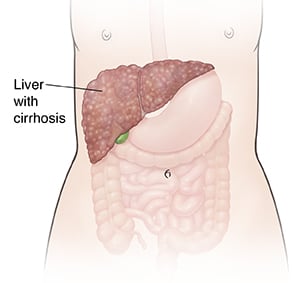
The liver
The liver is a large organ in the upper right part of the belly. A healthy liver breaks down proteins, carbohydrates, and fats. It makes a digestive fluid called bile. It also takes toxins out of the blood. The liver is part of the blood-clotting process.
Causes of cirrhosis
The causes of cirrhosis may include:
- Alcohol use
- Viral liver infections, such as hepatitis B and C
- Chronic bile duct blockage
- Some inherited diseases that cause too much copper or iron to be stored in the liver
- Some medicines
- Autoimmune disease
Another cause is metabolic dysfunction-associated steatotic liver disease. This is very common. It often happens in people who have other risk factors linked to extra weight or obesity. These include:
- Diabetes
- High blood pressure
- High cholesterol or triglycerides
- Other metabolic problems
Common signs and symptoms
Common symptoms of cirrhosis include:
- Severe tiredness (fatigue)
- Weakness
- Low appetite
- Upset stomach (nausea) and vomiting
- Weight loss or weight gain
- Yellowish skin and eyes (jaundice)
- Severe itching
- Swollen belly and legs
- Mild pain in the right upper side of your belly
- Intestinal bleeding
- Easy skin bruising and bleeding
- Enlarged (dilated) veins in the esophagus and stomach. This can lead to serious GI bleeding.
- Poor mental function
- Spider-like blood vessels
When you have cirrhosis
When you have cirrhosis, your liver gets damaged and scarred. It doesn't work as it should. In some cases, cirrhosis can lead to liver failure. If it does, you may need a liver transplant. Cirrhosis puts you at higher risk for liver cancer. Other tests are needed to look for problems from cirrhosis and check for liver cancer. Keep all follow-up appointments with your doctor.
You can slow down cirrhosis and prevent more liver damage if you stop all alcohol use. Here are other changes you can make:
- Lose extra weight.
- Control blood sugar if you have diabetes.
- Don't eat raw or uncooked shellfish, fish, meat, and unpasteurized dairy products.
- Limit salt in food and drinks.
- Talk with a dietitian for meal planning (due to risk of malnutrition).
- Talk with your doctor about all the medicines, vitamins, and supplements you take.
- Ask your doctor if hepatitis A and B vaccines are right for you.
Online Medical Reviewer: Chris Southard RN
Online Medical Reviewer: Rita Sather RN
Online Medical Reviewer: Sabrina Felson MD
Date Last Reviewed: 03/01/2024
© 2000-2026 The StayWell Company, LLC. All rights reserved. This information is not intended as a substitute for professional medical care. Always follow your healthcare professional's instructions.
Related Articles
What Is Crohn's Disease?
Crohn's disease causes swelling, inflammation, and irritation in the digestive tract. It is a form of inflammatory bowel disease (IBD). Read on to learn more.
Understanding a Bruised Spleen
Understand the causes, symptoms, and treatment of a bruised spleen.
Dysphagia (Adult)
Dysphagia is trouble swallowing.
What is Ulcerative Colitis?
Ulcerative colitis causes inflammation and sores (ulcers) in the inner lining of the rectum and colon. It is a form of inflammatory bowel disease (IBD). Read on to learn about how this condition is diagnosed and treated.


