Coping with Ménière’s disease is not easy. Learn as much as you can about how to deal with attacks and how to help yourself between attacks.
Your daily life
The unpredictable and disruptive symptoms of Ménière’s disease will probably mean having to make changes in your daily life. Keep these strategies in mind:
-
At work. If symptoms interfere with your job, think about changes that would help. Then talk to your employer. If changes can’t be made, ask whether moving to a better-suited position within the company is a choice. Ask your human resources office if you qualify for protection under the Americans with Disabilities Act (ADA). Or go to www.ada.gov for more information.
-
At home. If your balance is unsteady, move sharp, breakable objects out of the way. Arrange stable, sturdy objects so you can use them for support.
-
In the car. If you have attacks that occur without warning, driving may be dangerous for you. Explore public or private transportation choices. Low-cost transportation is often available for those who need it.
Wear a medical alert bracelet or necklace and carry information about your condition in your wallet.
What to do during an attack
-
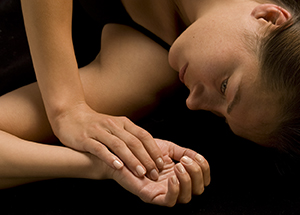
Lie down on a firm surface in a darkened room.
-
Stay as still as possible.
-
Keep your eyes open. It may help to stare at a stationary object.
-
Take any medicines that your health care provider has prescribed to use for an attack.
-
Don’t get up until the dizziness or spinning sensation passes. When you do get up, do so slowly.
-
Find a comfortable place to rest or sleep for several hours while you regain your sense of balance.
Online Medical Reviewer: Ashutosh Kacker MD
Online Medical Reviewer: Rita Sather RN
Online Medical Reviewer: Tara Novick BSN MSN
Date Last Reviewed: 04/01/2025
© 2000-2026 The StayWell Company, LLC. All rights reserved. This information is not intended as a substitute for professional medical care. Always follow your healthcare professional's instructions.
Related Articles
Ears and airplane travel, earwax, and ear cleaning
Detailed information on ears and airplane travel, ear wax, and ear cleaning.
Dysphagia Diet: Managing Drinks
Dysphagia is trouble swallowing normally. A dysphagia diet is a way of eating and drinking that is safer for a person who has trouble swallowing. It helps to prevent aspiration. On a dysphagia diet, only certain kinds of liquids are safe to drink.
Adjusting to Having a Hearing Aid: New Ways to Hear
It's not easy to focus on a conversation when there's a lot of background noise. That's where aural rehab can help. With this training, you'll improve your hearing by learning new listening techniques. Read on to learn more.
Dysarthria: Improving Speech
Dysarthria is a speech problem caused by a lack of control over the muscles in the face and mouth. Clearer, smoother speech is the goal of rehabilitation.


