You have temporal arteritis (also called giant cell arteritis). This is an inflammation of the blood vessels that supply the head, neck, upper body, and arms. It can be diagnosed by examining a small piece of temporal artery, which is easily accessible. This artery is located in the scalp area just above each ear. When the arteries are inflamed, the vessel narrows, and blood flow slows down. A clot may also form inside the artery, stopping all blood flow. Reduced or blocked blood flow in the arteries that supply vital structures in the eye can cause blindness in the affected eye. In rare cases, stroke may occur.
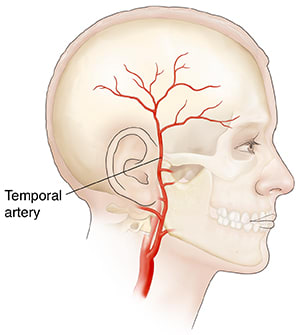
Doctors don't know what causes temporal arteritis. Symptoms include headache, tenderness of the temples or scalp, jaw pain when chewing, muscle aches, tiredness (fatigue), fever, and unintentional weight loss.
Steroids, such as prednisone, are used to treat this condition. These reduce inflammation in the arteries. Most people start to feel better a few days after treatment starts. Most people do recover from this condition, but it may need continued treatment for 1 or 2 years. Long-term steroid treatment can cause various serious side effects. These include osteoporosis, high blood pressure, and diabetes. Talk to your doctor about side effects and ways to minimize them.
Home care
Take medicines as directed by your doctor. These suggestions will help reduce side effects from long-term steroid use.
Nutrition
- Eat plenty of fresh fruits, vegetables, and whole grains.
- Choose mostly lean sources of protein.
- Limit the use of salt, sugar, and alcohol.
- Be sure to get enough calcium and vitamin D. Low-fat dairy foods are an excellent source of these nutrients. If you are not able to eat dairy, you can choose lactose-free products instead. Here are some other foods that contain calcium:
- Kale and broccoli
- White beans, green beans, and lima beans
- Salmon
- Soybeans or tofu
- Fortified juices
- You can also take daily calcium supplements. Ask your doctor how much calcium you should take each day.
Exercise
Get regular aerobic exercise, up to 30 minutes on most days. Exercise can help prevent bone loss, heart disease, and diabetes. It also relieves stress and can improve your mood and your overall quality of life. If you don't already exercise regularly, ask your doctor for help setting up a program.
Follow-up care
Follow up with your doctor as advised.
When to seek medical advice
Contact your doctor right away if any of the following occur:
- Worsening symptoms
- Numbness or weakness of the face, one arm, or one leg
- Slurred speech, confusion, or trouble speaking or walking
- Severe headache
- Fainting spell, dizziness, or seizure
- Pain in the chest, arm, neck, or upper back
- Sudden loss or change in vision
Online Medical Reviewer: Deepak Sudheendra MD
Online Medical Reviewer: Melinda Murray Ratini DO
Online Medical Reviewer: Raymond Kent Turley BSN MSN RN
Date Last Reviewed: 09/01/2025
© 2000-2026 The StayWell Company, LLC. All rights reserved. This information is not intended as a substitute for professional medical care. Always follow your healthcare professional's instructions.
Related Articles
What Is Presbyopia?
Presbyopia is the loss of close-up focusing. With age, the lens in the eye hardens and can't change its shape as easily. It then can't focus clearly on close objects. This makes them look blurry.
Understanding computer vision syndrome
CVS is very common. Your eyes may itch and tear, or be dry and red. You may not be able to focus well. These problems are the result of a lot of computer use.
What Are Retinal Tears and Detachments?
The retina is the inside lining of the eye. It turns light into nerve signals. These signals are then sent to the brain where they become the images you see. The retina may be torn or detached due to aging, an eye injury, or other problems. Tears and detachments are painless.
Nystagmus
Nystagmus is abnormal eye movement that can't be controlled. Some treatment options may help reduce symptoms, but they won't stop the problem completely.


