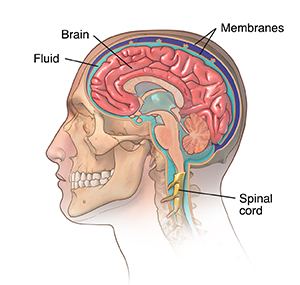
Meningitis is an infection of the membrane and fluid around the brain and spinal cord. It strikes very fast. It spreads quickly through the body. And it may cause severe long-term health problems. It can even be fatal. So it's vital to get medical help right away if you think you or a loved one has this infection.
Symptoms of bacterial meningitis
Call 911 right away if you, your child, or a family member has a sudden fever of 100.4°F (38°C) or higher with any of the following:
-
Severe headache that doesn’t go away
-
Stiff neck (arching back or neck in infants)
-
Nausea or vomiting with headache
-
Double vision
-
Sleepiness or trouble waking up
-
Irritability
-
Dislike of being handled (infants)
-
Bruise-like rash or splotchy skin
-
Sensitivity to light
-
Bulging of the soft spot on the skull (fontanelle) in babies
Have any baby checked by a healthcare provider right away if they are very irritable, very sleepy, or eat poorly.
Diagnosing bacterial meningitis
Tests that may be done include:
-
Spinal tap (lumbar puncture). This test takes a sample of spinal fluid from the low back. The fluid is tested for bacteria, virus, blood, and glucose. This is the best test to confirm this infection.
-
CT scan or MRI. These tests are often done to look for other causes of symptoms before a spinal tap is done.
-
Lab screening. Lab screening of blood, urine, and body secretions can find and identify infection. It can tell if there are antibodies and foreign proteins.
Treating bacterial meningitis
This infection must be treated as soon as possible. A child or adult with bacterial meningitis will be closely watched in the hospital. Medicines that fight infection (antibiotics) are given through an IV (intravenous) line. This is a tube put into a vein in the arm or hand. Other treatments may include draining infected fluid from the sinuses. And anti-seizure or steroid medicines to prevent seizures and reduce brain inflammation.
Preventing bacterial meningitis
To help prevent this infection:
-
Make sure your child has had all routine childhood vaccines on time and on schedule.
-
Ask your healthcare provider if you or your child should get a flu shot or vaccines against pneumonia or meningitis.
-
Call your healthcare provider right away if you, your child, or a member of the household has been around anyone who has meningitis.
Online Medical Reviewer: Anne Fetterman RN BSN
Online Medical Reviewer: Marianne Fraser MSN RN
Online Medical Reviewer: Rita Sather RN
Date Last Reviewed: 03/01/2024
© 2000-2026 The StayWell Company, LLC. All rights reserved. This information is not intended as a substitute for professional medical care. Always follow your healthcare professional's instructions.
Related Articles
Understanding Chickenpox
Chickenpox is a viral illness that spreads very easily from person to person. The virus that causes chickenpox can stay in the body after the illness and later cause shingles. Learn about its symptoms and how it's treated.
Typhoid Fever
Typhoid fever is a serious infection caused by bacteria. You can get the disease by eating food or drinking water that is contaminated with the bacteria.
Herpes Keratitis
Herpes keratitis is an infection of the cornea with the herpes simplex virus. It is a very serious disease, which can cause blindness if it isn't treated. Here's how to care for yourself at home.
Tetanus
Tetanus is a sometimes fatal disease of the central nervous system. It's caused by the toxin of the tetanus bacterium. The bacterium usually enters the body through an open wound. Tetanus bacteria live in soil and manure.


