Birth control pills contain hormones that help prevent pregnancy. The pills are prescribed by your doctor. There are many types of birth control pills available. If you have side effects from one type of pill, tell your doctor. They may be able to prescribe a pill that works better for you.
Pregnancy rates
Talk to your doctor about the effectiveness of this birth control method.
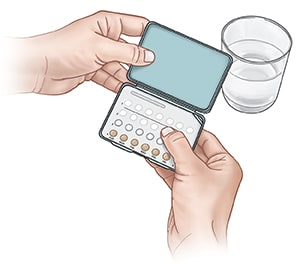
Using the pill
- Take 1 pill daily. Take it at around the same time each day.
- Follow your doctor's guidelines on when to start your first pack of pills. You may need to use another form of birth control for a week or more after you start.
- Know what to do if you forget to take a pill. (Contact your doctor or check the package.) If you miss more than 1 pill, you may need to use a backup method of birth control for a week or more.
Pros
- Low pregnancy rate
- No interruption to sex
- Easy to use
- Can help make periods more regular
- May lower your risk of ovarian cysts and certain cancers
- May decrease menstrual cramps, menstrual flow, and acne
Cons
- Does not protect against sexually transmitted infections (STIs)
- Requires taking a pill on time each day
- May not work as well when taken with certain other medicines. (Check with your pharmacist.)
- May cause side effects, such as nausea, irregular bleeding, headaches, breast tenderness, fatigue, or mood changes. (These often go away within 3 months.)
- May increase the risk of blood clots, heart attack, and stroke
The pill may not be for you
The pill may not be for you if:
- You are a smoker and over age 35.
- You have high blood pressure or gallbladder, liver, cerebrovascular problems, or heart disease.
- You have diabetes, migraines, blood clot in the vein or artery, lupus, depression, certain lipid disorders, or take medicines that interfere with the pill.
In these cases, discuss the risks with your doctor.
Featured in
Online Medical Reviewer: Donna Freeborn PhD CNM FNP
Online Medical Reviewer: Heather Trevino
Online Medical Reviewer: Irina Burd MD PhD
Date Last Reviewed: 09/01/2025
© 2000-2026 The StayWell Company, LLC. All rights reserved. This information is not intended as a substitute for professional medical care. Always follow your healthcare professional's instructions.
Related Articles
When You Have an Abnormal Pap Test
The Pap test is a screening test that checks for cell changes in the cervix, which is the opening of the uterus.
Birth Control: Condoms
A condom is a sheath that forms a barrier between the penis and the vagina. Condoms can be used alone or with other forms of birth control to provide protection against pregnancy.
Understanding Changes in Your Cervix
Cells in the cervix are always changing. In some cases, these cells can change to become abnormal. This is called dysplasia. Dysplasia can turn into cancer. But with regular Pap tests, dysplasia can be caught and treated early.
What Is Pelvic Inflammatory Disease (PID)?
PID is an infection of the reproductive organs. Left untreated, it can cause severe damage to the body, including infertility.