Several types of casts are available to help injuries heal. Your doctor will decide what type of cast will work best for your injury.
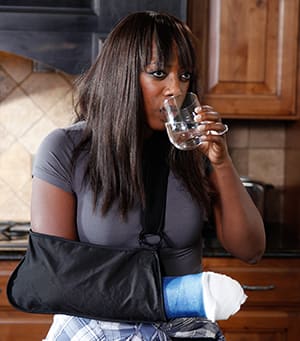
Types of casts
- Plaster cast. This is made from gauze and plaster strips soaked in water. These are wrapped around the injured body part over a stockinette and cotton padding. As they dry, the strips harden. The cast takes 24 to 48 hours to harden fully.
- Synthetic cast. This is made from fiberglass or plastic strips. These are wrapped around the injury over a stockinette and cotton padding. Synthetic casts can be different colors. A synthetic cast is lighter than plaster. It dries in a few minutes but may take a few hours to harden fully. Synthetic stockinettes and padding are also available.
- Cast brace. This is made of hard plastic. Soft pads inside the brace push against (compress) the injury. The brace is held in place with Velcro strips and can be removed. A cast brace may be used right after the injury happens. Or it may be used toward the end of healing, after another cast has been removed.
- Splint (or half cast). This is made from slabs of plaster or fiberglass that hold the injury still. A bandage is wrapped around the injury to hold the slabs in place. Splints are often used when swelling is present or you have a risk of swelling. In most cases, the splint is later replaced with another type of cast.
Cast aids
Cast aids help you get around safely and comfortably. If you need any of these, your doctor will teach you how to use them:
- Sling. This keeps your injured arm still and helps carry your cast.
- Cane. This helps you balance and put less weight on an injured leg.
- Walking cast. This is a cast you can walk on. You may wear a cast shoe over your cast to keep it clean and protected.
- Walker. This helps you balance and keep weight off an injured leg. Some walkers have wheels and can be pushed as you walk. Others are lifted and placed down as you step.
- Crutches. These help you balance and keep weight off an injured leg. When using crutches, make sure they are sized correctly. Remember to support yourself with your hands and upper arms. Don't rest crutches in your armpits. Doing so could damage the nerves leading to your arms and hands.
When to contact your doctor
Contact your doctor right away if you have:
- Pain or tightness that gets worse from the cast or splint.
- Numbness, tingling, or burning below a cast or splint.
- Excessive swelling above or below a cast or splint.
- Loss of active movement of fingers or toes below a cast.
Online Medical Reviewer: L Renee Watson MSN RN
Online Medical Reviewer: Raymond Turley Jr PA-C
Online Medical Reviewer: Thomas N Joseph MD
Date Last Reviewed: 02/01/2024
© 2000-2026 The StayWell Company, LLC. All rights reserved. This information is not intended as a substitute for professional medical care. Always follow your healthcare professional's instructions.

Related Articles
Discharge Instructions: Using a Jewett Brace
A Jewett brace keeps your back in position while it is healing after surgery or injury. Wear your brace as directed by your doctor.
Discharge Instructions: Removable Cast Care (Child)
Your child will be going home with a removable cast (sometimes referred to as a splint). A cast helps your child’s body heal by holding injured bones or joints in place. A damaged cast can keep the injury from healing well. Take good care of your child’s cast. Here's what you need to know about home care.
Standing with Crutches (Weight Bearing)
These images show you how to safely stand up using crutches.
What to Expect: The Months After Amputation Surgery
Here's what to expect in the months after amputation surgery.


