The body has a natural system for maintaining bone. Understanding this system can help you learn how to maintain your bones.
A balanced system supports the body
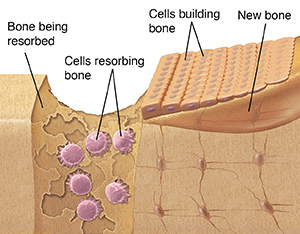
The body is always losing (resorbing) and making bone. This process is called remodeling. Bone-resorbing cells take bone apart. They do this so the minerals can be used to repair an injury or make new bone. Bone-making cells form new bone using calcium and other minerals. These minerals come from the food you eat. When this bone-making system is in balance, the same amount of bone is built and resorbed.
An unbalanced system can't give support
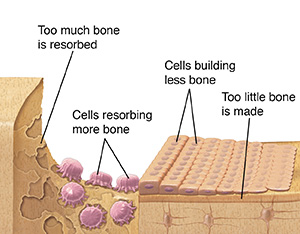
Changes in hormone levels, activity, medicines, or diet can affect the bone-making system. When the system gets out of balance, the amount of bone lost is greater than the amount of bone made. This can cause osteopenia. It is when bone starts to become less dense. Left untreated, bone loss gets worse, leading to osteoporosis. Weak bones can’t support the body. In fact, they can break (fracture) just from the weight of your body. This often happens in bones of the spine (vertebrae). When vertebrae fracture, parts of the spine compress. This causes the back to bend or hump over, and it can also cause back pain.
Online Medical Reviewer: Banerjee, Rahul, MD
Online Medical Reviewer: Fetterman, Anne, RN, BSN
Date Last Reviewed: 03/01/2024
© 2000-2026 The StayWell Company, LLC. All rights reserved. This information is not intended as a substitute for professional medical care. Always follow your healthcare professional's instructions.

Related Articles
Understanding Ankle Sprain
When ankle ligaments are stretched to the point of pain and injury, it's called an ankle sprain. A sprain can tear the ligaments. These tears can be very small but still cause pain.
Understanding Frozen Shoulder
If you feel nagging pain and stiffness in your shoulder, you may have frozen shoulder. It is not well understood, but it often improves over time with treatment.
Heel Spurs
A heel spur is an overgrowth of bone where the plantar fascia attaches to the heel bone. Read on to learn how to care for yourself if you have a heel spur.
Shoulder Impingement Syndrome
The rotator cuff is a group of muscles and tendons that surround the shoulder joint. These muscles and tendons hold the arm in its joint. They help the shoulder turn. The rotator cuff muscles and tendons can become irritated from repeated rubbing against the shoulder bone. This is called shoulder impingement syndrome or rotator cuff tendonitis.


