A gastrocnemius muscle tear is caused by a severe, sudden injury to your calf muscle. This muscle helps flex the lower leg. It also helps you do quick movements, such as jumping and sprinting. An injury to this muscle is sometimes called “tennis leg.”
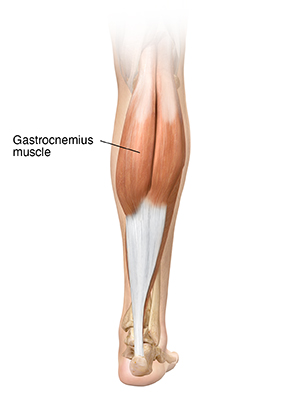
How to say it
gas-trahk-NEE-mee-uhs
What causes a gastrocnemius muscle tear?
This injury can happen if you make a sudden quick movement that overstretches the muscle. Such movements include jumping and quickly changing direction. People who play sports like tennis or basketball are more likely to suffer such a muscle tear. Exercising too much or not warming up properly can weaken the gastrocnemius muscle.
Symptoms of a gastrocnemius muscle tear
At the time of injury, you may hear a popping sound or feel a tearing sensation in your calf. Other symptoms include:
-
Pain.
-
Swelling.
-
Bruising.
-
Problems walking or putting weight on the injured leg.
Treatment for a gastrocnemius muscle tear
Treatment depends on how severe the muscle tear is. The severity will also affect how long it takes to heal. Treatments may include:
-
Rest. Avoid walking or other activities that cause pain.
-
Ice. Putting ice on the injured area may ease swelling.
-
Elevation. Propping up your calf slightly above the level of your heart may ease swelling.
-
Prescription or over-the-counter medicines. These help reduce pain and swelling.
-
Walking boot or crutches. Your health care provider may fit you with one of these devices to help you move with less pain.
-
Heel lifts. These are placed inside your shoes. When you wear them, your calf won’t stretch as much, easing pain.
-
Compression sleeve. You may need to wear one of these to decrease swelling and help prevent blood clots in your injured leg.
-
Strengthening and stretching exercises. Certain exercises can help you regain strength and flexibility in your calf.
Complications of gastrocnemius muscle tear
-
Calf weakness
-
Acute compartment syndrome, when pressure builds up in the muscles of the foot and impedes blood flow
-
Deep vein thrombosis, when blood clots form in the veins of the legs
When to get medical advice
Contact your health care provider right away if you have:
-
A fever of 100.4°F (38°C) or higher, or as directed by your provider.
-
Chills.
-
Pain that gets worse despite pain medicine and rest.
-
Symptoms that don’t get better or that get worse.
-
New symptoms.
Author: Semko, Laura
Online Medical Reviewer: Raymond Turley Jr PA-C
Online Medical Reviewer: Stacey Wojcik MBA BSN RN
Online Medical Reviewer: Thomas N Joseph MD
Date Last Reviewed: 03/01/2025
© 2000-2026 The StayWell Company, LLC. All rights reserved. This information is not intended as a substitute for professional medical care. Always follow your healthcare professional's instructions.

Related Articles
Understanding Lateral Epicondylitis
This condition, also called tennis elbow, is an inflammation around the bony knob (lateral epicondyle) on the outer side of the elbow. It occurs when the tissue that attaches muscle to the bone becomes irritated.
Rib Contusion or Minor Fracture
A rib fracture (bone break) may cause the same symptoms as a rib contusion. Treatment for both is the same.
Knee Sprain
A sprain is an injury to the ligaments or capsule that holds a joint together. Here's how to care for yourself at home.
Understanding Osteonecrosis
Osteonecrosis is a disease of the bones. Over time, the bone breaks down. Learn about the causes, symptoms, treatment, and possible complications of this condition.


