The shoulder is the most flexible joint in the body. But it does have limits. If the joint is pushed past these limits, the shoulder joint may move too much. This is called shoulder instability.
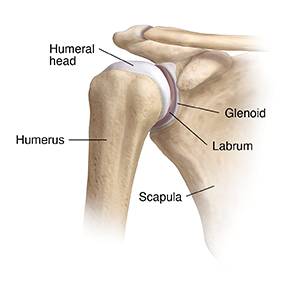
The shoulder is a shallow ball-and-socket joint. The humeral head is the ball of the top of the upper arm bone (humerus). The glenoid is a shallow socket on the shoulder blade. The humeral head rests on the glenoid and is held in place by strong tissues. These tissues include:
-
Labrum. This is a circle of cartilage. It covers the rim of the socket.
-
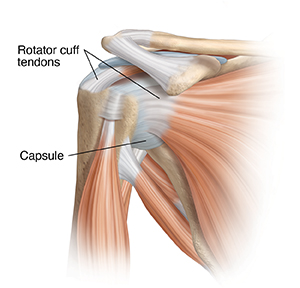
Capsule. This is a sheet of ligaments and other tough tissues. It encloses the joint and connects the ball to the socket.
-
Rotator cuff. This is a group of 4 muscles and tendons. These stretch between the ball and shoulder blade.
Shoulder instability can occur when any of these structures are weakened or torn, and the ball doesn’t stay centered in the socket. Multidirectional shoulder instability means the ball moves too far in more than 1 direction (forward, back, or down). This extra movement can lead to discomfort, pain, and problems using the shoulder.
What causes multidirectional shoulder instability?
A serious injury can lead to shoulder instability. Or the problem may happen slowly over time. Causes include:
-
Having loose joints (being double-jointed).
-
Repeated overhead motions, such as throwing or swimming.
-
Repeated shoulder injuries.
-
Dislocating the shoulder joint. This means the ball is forced out of the socket.
-
Fracturing part of the shoulder joint.
Symptoms of multidirectional shoulder instability
These can include 1 or more of the following:
-
Feeling that the shoulder slips out of place
-
Discomfort or pain when using the shoulder. This often occurs when making an overhead movement, carrying heavy objects, or pushing heavy doors
-
Shoulder weakness, numbness, or tingling
-
Catching, popping, or grinding in the joint
-
Trouble using the shoulder or arm
Treatment for multidirectional shoulder instability
The goal of treatment is to reduce pain and improve shoulder function. Choices include:
-
Physical therapy. This can help restore strength and stability to your shoulder. Some treatments help reduce pain. Physical therapy for this condition often takes several months.
-
Over-the-counter or prescription medicines. These help relieve pain and swelling. Nonsteroidal anti-inflammatory drugs are the most common medicines used. Medicines may be prescribed or bought over the counter. They may be given as pills. Or they may be put on the skin as a gel, cream, or patch.
-
Surgery. If physical therapy isn’t enough to heal your shoulder, you may need surgery to repair the tissues that stabilize the joint. This surgery often makes the shoulder tighter than before, so you may lose a small amount of flexibility.
When to contact your doctor
Contact your provider right away if:
-
You have a fever of 100.4°F (38°C) or higher, or as directed by your provider.
-
You have chills.
-
Your symptoms don’t get better, or they get worse.
-
You have new symptoms.
Author: Michels, Karen
Online Medical Reviewer: Raymond Turley Jr PA-C
Online Medical Reviewer: Stacey Wojcik MBA BSN RN
Online Medical Reviewer: Thomas N Joseph MD
Date Last Reviewed: 03/01/2025
© 2000-2026 The StayWell Company, LLC. All rights reserved. This information is not intended as a substitute for professional medical care. Always follow your healthcare professional's instructions.

Related Articles
Back Pain (Acute or Chronic)
Back pain is 1 of the most common problems. The good news is that most people feel better in 1 to 2 weeks, and most of the rest in 1 to 2 months. Most people can remain active.
Sacroiliitis
Sacroiliitis is when one or both sacroiliac joints are hurt or inflamed. It can make small movements of the lower back and pelvis very painful. Learn how to care for yourself at home.
Understanding Lumbar Radiculopathy (Sciatica)
Lumbar radiculopathy is irritation or inflammation of a nerve root in the low back. It causes symptoms that spread out from the back down 1 or both legs.
Understanding Osgood-Schlatter Disease: Anatomy
Read how Osgood-Schlatter disease affects your knee, and see an illustration of the knee showing where it occurs.


