Osteoporosis is a disease that weakens the bones. Weakened bones are more likely to break (fracture). Osteoporosis can affect anyone. But those most at risk are postmenopausal women. To help prevent osteoporosis, you need to exercise and nourish your bones throughout your life.
Childhood
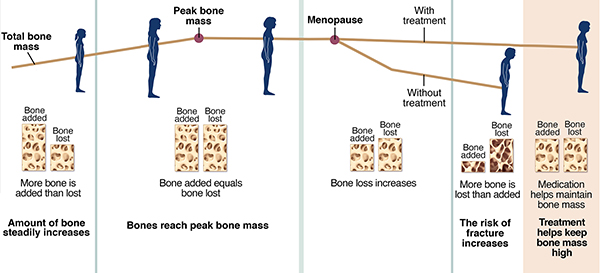
The body builds the most bone during these years. That's why children need foods rich in calcium. They also need plenty of exercise. A healthy diet and exercise helps bones grow strong.
Young adulthood to age 30
During young adulthood, bones become their strongest. This is called peak bone mass. The same good habits that kept bones healthy in childhood help keep bones healthy in adulthood.
Age 30 to menopause
Bone mass declines slightly during these years. Your body makes just enough new bone to maintain peak bone mass. To keep your bones at their peak mass, be sure to exercise and get plenty of calcium.
After menopause
Menopause is when a woman stops having monthly periods. After menopause, the body makes less estrogen (female hormone). This increases bone loss. At this point, treatment may be needed to reduce the risk for fracture. Exercise, calcium, and vitamin D supplements can also help keep your bones strong.
Later in life
In later years, all adults need to take extra care of their bones. By this point, the body loses more bone than it makes. If too much bone is lost, you may be at increased risk for fractures. With age, the quality and quantity of bone declines. You can reduce bone loss by staying active and increasing your calcium and vitamin D intake. Osteoporosis supplements and treatments may have risks, so talk with your healthcare provider if you have concerns. If you have osteoporosis, it is important to learn ways to increase everyday safety.
Online Medical Reviewer: Raymond Turley Jr PA-C
Online Medical Reviewer: Rita Sather RN
Online Medical Reviewer: Thomas N Joseph MD
Date Last Reviewed: 10/01/2024
© 2000-2026 The StayWell Company, LLC. All rights reserved. This information is not intended as a substitute for professional medical care. Always follow your healthcare professional's instructions.

Related Articles
Understanding Lumbar Radiculopathy (Sciatica)
Lumbar radiculopathy is irritation or inflammation of a nerve root in the low back. It causes symptoms that spread out from the back down 1 or both legs.
AC Arthritis (Acromioclavicular Arthritis)
Arthritis is a type of damage to a joint that can cause inflammation. AC arthritis affects the acromioclavicular (AC) joint. This joins the shoulder blade (scapula) and the collarbone (clavicle). AC arthritis is fairly common in older adults.
Understanding Osgood-Schlatter Disease: Anatomy
Read how Osgood-Schlatter disease affects your knee, and see an illustration of the knee showing where it occurs.
Back Pain (Acute or Chronic)
Back pain is 1 of the most common problems. The good news is that most people feel better in 1 to 2 weeks, and most of the rest in 1 to 2 months. Most people can remain active.


