Acne is a skin condition that causes blemishes on the face, back, neck, chest, buttocks, or upper arms. Having acne can be very upsetting. You may feel less attractive. And it may seem as though your skin will never clear up. In time, your acne may go away by itself. But treatment can help to control your acne now.
How you get acne
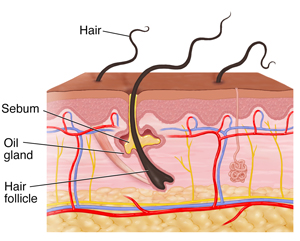
Acne starts inside the hair follicles under the surface of your skin. During puberty, hormones called androgens increase the size of the skin’s oil glands. Oil glands that open into the hair follicles release too much oil (sebum). Sebum and skin cells then clog the tiny openings on your skin (pores). Bacteria can then get trapped in the follicles. This leads to swelling, inflammation, and acne blemishes.
Acne is not caused by the food you eat or drink—for example, chocolate or soda. But studies have found that eating more foods with a high glycemic index is linked with acne in adolescence.
Types of acne
The four main types of acne blemishes are described below:
-
Whiteheads (closed comedones) are round, white, pus-filled blemishes that form when hair follicles become clogged and sealed over.
-
Blackheads (open comedones) are round, dark pits that form when a hair follicle is clogged but has an opening to the air.
-
Pimples are red, swollen bumps that form when plugged follicle walls break near the skin's surface.
-
Deep cysts are pus-filled pimples. They form when plugged follicle walls break deep within the skin. Acne cysts are often large and painful. In some cases, they also cause scars.
What your health care provider can do
Some teens see their health care provider for their acne because they are upset by the way their skin looks. Ask your provider about the best way to control your specific type of acne. It takes time for pimples that you already have to heal. But treatment helps prevent new blemishes and scars from forming. If no new blemishes form, no new scarring can occur. Medicines can and will improve your acne, but it often takes several months, not several days. If you stop taking the medicines, the acne will usually come back. Treatment choices may include:
-
Medicines taken by mouth (orally).
-
Medicines applied to the skin (topical).
-
Physical removal of blemishes.
-
Laser therapy or chemical peels.
-
Surgical removal of acne scars.
Make sure you understand your treatment plan. If you have any questions, ask your provider. You will play an important role in controlling your acne.
Featured in

Related Articles
Controlling Teen Acne
Your acne treatment will work best if you follow your treatment plan. Acne often takes months to improve, so you will need to be patient.
For Teens: Deciding About Sex
Making the decision to have sex is a complex choice. In school and around friends, you may be feeling pressure about it. But before you make a decision to have sex, make sure you think about what’s at risk.
Abrasions
Abrasions are skin scrapes. Their treatment depends on how large and deep the abrasion is. Read on to learn about general care when you are home and when to call the health care provider.
Yeast Infection
Yeast is a fungus normally found inside your body and on your skin. When too much yeast grows, it can cause an infection. Antifungal creams or medicines taken by mouth are used to treat it.