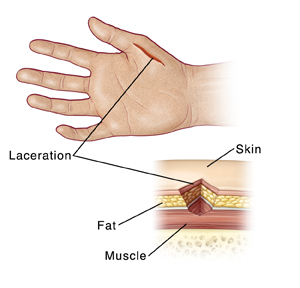
A laceration is a cut through the skin. Deep cuts usually need stitches. Minor cuts may be closed with surgical tape or skin adhesive.
X-rays may be done if something may have entered the skin through the cut, such as broken glass. You may also be given a tetanus shot if you are not up-to-date on this vaccine and the nature of the cut may lead to tetanus.
Home care
-
Follow all directions for taking medicines that your doctor may prescribe.
-
Your doctor may prescribe an antibiotic. This is to help prevent infection. Take the medicine every day until it's gone, or you are told to stop. You should not have any left over.
-
Your doctor may prescribe medicine for pain. Know how and when to take this medicine. If your doctor did not prescribe pain medicine, you may use over-the-counter pain medicine. If you have chronic liver or kidney disease, or ever had a stomach ulcer or gastrointestinal bleeding, talk with your doctor before using these medicines. If you are taking a blood-thinning medicine, also talk with your doctor before using these medicines.
-
-
Follow your doctor’s directions on how to care for the cut.
-
Keep the wound clean and dry. Don't get the wound wet until you are told it's okay to do so. If the bandage gets wet, remove it. Gently pat the wound dry with a clean cloth. Then put on a clean, dry bandage.
-
To help prevent infection, wash your hands with soap and water before and after caring for the wound.
-
Caring for stitches. Once you no longer need to keep the stitches dry, clean the wound daily. First, remove the bandage. Then wash the area gently with soap and warm water, or as directed by your doctor. Use a clean, wet cotton swab to loosen and remove any blood or crust that forms. After cleaning, apply a thin layer of antibiotic ointment if advised. Then put on a new bandage unless you are told not to.
-
Caring for skin glue. Don’t put any liquid, ointment, or cream on the wound while the glue is in place. For the first 7 days, it's okay to briefly shower, but don't submerge the glue under water. Stay away from activities that cause heavy sweating. Protect the wound from sunlight. Don't scratch, rub, or pick at the adhesive film. Don't place tape directly over the film. The glue should fall off by itself within 5 to 10 days. Contact your doctor if you have skin blistering or excessive itching.
-
Caring for surgical tape. Keep the area dry. If it gets wet, blot it dry with a clean towel. Surgical tape usually falls off within 7 to 10 days. If it has not fallen off after 10 days, you can take it off yourself. Put mineral oil or petroleum jelly on a cotton ball and gently rub the tape until it's removed.
-
Shower as usual once you can get the wound wet, but don't soak the wound in water. This means no tub baths or swimming until it's fully healed.
-
Keep the wound out of prolonged direct sunlight, especially in the summer months. After the wound heals, continue to stay out of direct sunlight, or use a sunscreen with a high level of protection. Sunburn or sun exposure can increase scarring.
-
Check the wound daily for signs of infection listed below. Even with correct treatment, a wound infection may sometimes occur.
Follow-up care
Follow up with your doctor as advised. If you have stitches, they will have to be removed as instructed.
When to get medical advice
Contact your doctor right away if you have:
-
Wound bleeding that is not controlled by direct pressure.
-
Signs of infection, including increasing pain in the wound, increasing wound redness or swelling, or pus or bad odor coming from the wound.
-
A fever of 100.4°F (38ºC) or higher (or 1 degree or higher above your normal temperature) , or as directed by your doctor.
-
Chills.
-
Stitches that come apart or fall out, or surgical tape that falls off before 7 days.
-
Wound edges that reopen.
-
A wound that changes colors.
-
Numbness or weakness in the affected hand.
-
Decreased movement of the hand, or an individual finger or part of a finger.
Online Medical Reviewer: Daphne Pierce-Smith RN MSN
Online Medical Reviewer: Rajadurai Samnishanth Researcher
Online Medical Reviewer: Ronald Karlin MD
Date Last Reviewed: 05/01/2025
© 2000-2026 The StayWell Company, LLC. All rights reserved. This information is not intended as a substitute for professional medical care. Always follow your healthcare professional's instructions.
Related Articles
Gunshot Wound
Follow these guidelines to care for your gunshot wound at home.
Face Laceration: Stitches or Tape
A laceration is a cut through the skin. This will require stitches if it is deep. Minor cuts may be treated with surgical tape.
Cold Injury First Aid
Learn how to care for yourself as you recover from frostbite or frostnip.
Bandage Change
If the bandage becomes wet or dirty, replace it. Otherwise, leave it in place for the first 24 hours. Then follow these guidelines to care for your injury at home.


