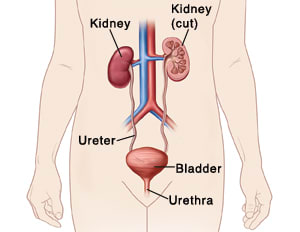
The kidneys remove waste products and extra fluid from the blood. Glomerulonephritis (GN) is an inflammation of the kidney. It affects how well the kidneys filter blood and get rid of wastes. You may also hear the terms nephritis and nephrotic syndrome used. This condition may last weeks to months (acute) or may last many years (chronic).
It can follow a bacterial or viral infection. These may include a strep infection of the throat or skin. An immune reaction or inflammation of the blood vessels in the kidney may also be the cause.
Symptoms of GN include:
- Cola- or iced tea-colored urine due to small amounts of blood in the urine
- Swelling of the face, hands, feet, and abdomen (edema)
- Tiredness
- Making less urine than before
Treatment depends on the exact cause of GN. Most types of acute GN recover fully. In some cases, acute GN can become chronic. It can lead to problems requiring dialysis. It's important that your doctor monitors you closely.
Home care
These guidelines will help you care for yourself at home:
- If a bacterial infection is the cause of your acute GN, you will be given antibiotics. Take them all as directed. People who have had close contact with you should see their doctor for testing and possible antibiotic treatment.
- Short-term bed rest is advised until kidney function improves.
- If you have signs of swelling, eat less salt. Your doctor may suggest a strict kidney diet.
- Don't take any of the following over-the-counter medicines, or talk with your doctor before using:
- Aspirin and anti-inflammatory medicines such as ibuprofen and naproxen. Short-term use of acetaminophen for fever or pain may be okay. But talk with your doctor first.
- Laxatives and antacids that contain magnesium or aluminum
- Certain stomach acid-blocking medicine such as cimetidine or ranitidine
- Herbal supplements
Follow-up care
Follow up with your doctor as advised. The following resources may be helpful:
- American Association of Kidney Patients , 800-749-2257
- National Kidney Foundation , 800-622-9010
Call 911
Call
- Severe weakness, dizziness, fainting, drowsiness, or confusion
- Chest pain or shortness of breath
- Fast, slow, or irregular heartbeat
When to get medical advice
Contact your doctor right away if any of these occur:
- Nausea or vomiting
- Unexpected weight gain or swelling in the legs, ankles, or around the eyes
- Decreased or absent urine output
- New or worsening symptoms
Online Medical Reviewer: Marianne Fraser MSN RN
Online Medical Reviewer: Raymond Kent Turley BSN MSN RN
Online Medical Reviewer: Walead Latif MD
Date Last Reviewed: 09/01/2025
© 2000-2026 The StayWell Company, LLC. All rights reserved. This information is not intended as a substitute for professional medical care. Always follow your healthcare professional's instructions.
Related Articles
Kidney Bruise
Some injuries can bruise your kidney. This may cause blood to appear in your urine. The blood may be in small amounts that you can't see or it might color your urine pink or light red.
Flank Pain With Uncertain Cause
Flank pain is often caused by a problem with your kidneys. It might be a kidney infection or a kidney stone. Other causes of flank pain include spinal arthritis, a pinched nerve from a back injury, and a back muscle strain or spasm.
Discharge Instructions for Kidney Transplant Biopsy
Your doctor removed a small piece of tissue from your transplanted kidney to examine it for signs of damage or rejection. The results of a transplant biopsy are usually available within a few hours, so if treatment is needed, it can be started as soon as possible.
Protein in the Urine (Proteinuria)
Proteinuria occurs when some of the normal protein in the bloodstream ends up in the urine. Protein in the urine will show up on a standard urine test. Protein in the urine can be a sign of serious disease or a harmless temporary condition.


