Fat is an important part of a healthy eating pattern. Your body needs some fat for energy and to absorb certain vitamins. But the type of fat you choose matters. Choosing unsaturated fats more often and limiting saturated and trans fats can help support health.
Choose unsaturated fats more often
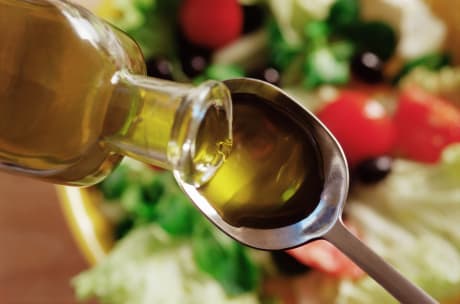
- Unsaturated fats are generally healthier choices and can be used more often when adding fat to foods.
- Unsaturated fats come from plants. They include olive, canola, peanut, corn, avocado, safflower, and sunflower oils.
Limit saturated fats
- Try to limit saturated fat. It raises your blood cholesterol levels.
- Most saturated fat comes from animal-based foods. Foods such as butter, lard, cheese, cream, whole milk, and fatty cuts of meat are high in saturated fat.
- Some oils are also saturated fats. These include palm and coconut oils.
Avoid trans fats
- Avoid trans fat as much as possible. Trans fat occurs naturally in some animal-based foods, such as whole-milk dairy, butter, and meat.
Other ways to add flavor
- Sprinkle herbs on fish, chicken, and meat, and in soups.
- Try herbs, lemon juice, or flavored vinegar on vegetables.
- Add chopped onions, garlic, and peppers to flavor beans and rice.
- Try the following ways to cook lean meats, fish, or poultry: bake, broil, roast, stew, or stir-fry.
Online Medical Reviewer: Brittany Poulson MDA RDN CD CDE
Online Medical Reviewer: Diane Horowitz MD
Online Medical Reviewer: Heather M Trevino BSN RNC
Date Last Reviewed: 04/01/2025
© 2000-2026 The StayWell Company, LLC. All rights reserved. This information is not intended as a substitute for professional medical care. Always follow your healthcare professional's instructions.
Related Articles
Eating the Right Number of Calories
Calories are a measure of the energy you get from food. If you eat more calories than you use, you will gain weight. If you eat fewer calories than you use, you will lose weight.
Eating a High-Protein Diet for Wound Care
If you have a hard-to-heal wound, your healthcare provider may advise you to eat more protein.
Healthy Snacking
Healthy snacking is possible. Here are some ideas for you.
Why Diets Don't Work
Research clearly shows that most diets don't work. Even those of us who lose weight on a diet generally regain most or all of the weight within a couple of years. But the way most diets are set up often leads to failure.


